













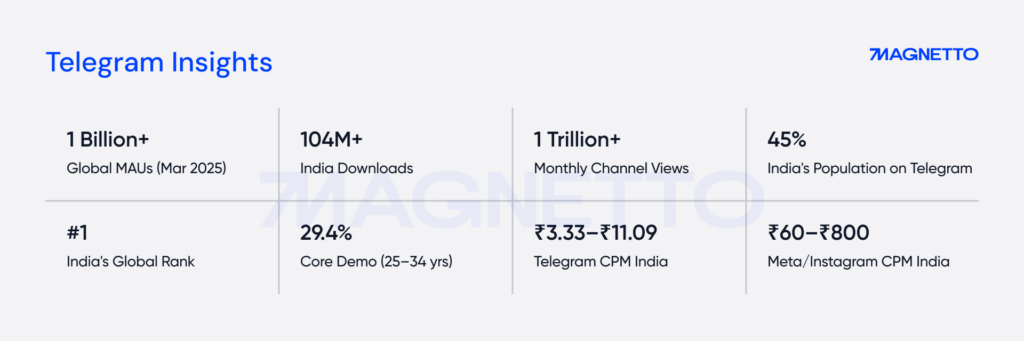
Here is a number that should stop every CMO in India: 104 million. That is how many times Indians have downloaded Telegram. And this number is more than any other country on earth, making India the platform’s single largest market globally. Telegram crossed one billion monthly active users in March 2025. And 45% of India’s population uses it regularly.
Yet in many boardrooms, Telegram is still treated as a niche messaging app. In this article, Alex Malgin, CEO at Magnetto.com, explains why Telegram is one of the biggest blind spots in Indian advertising right now and how brands can benefit from this channel.
Why Telegram Engagement in India Differs
Let’s take a look at numbers in context, because the raw figures are staggering even before you get to the advertising opportunity. Telegram’s public channels collectively generate over one trillion views per month globally. Those views are human eyeballs consuming content inside topic-driven communities that users join based on their interest. The platform’s demographic profile is almost tailor-made for brand spending: 29.4% of users are aged 25–34 and another 18.8% fall in the 18–24 bracket. This is the prime commercial cohort: digitally native, increasingly affluent, spread across every metro, Tier 2, and Tier 3 city in India.
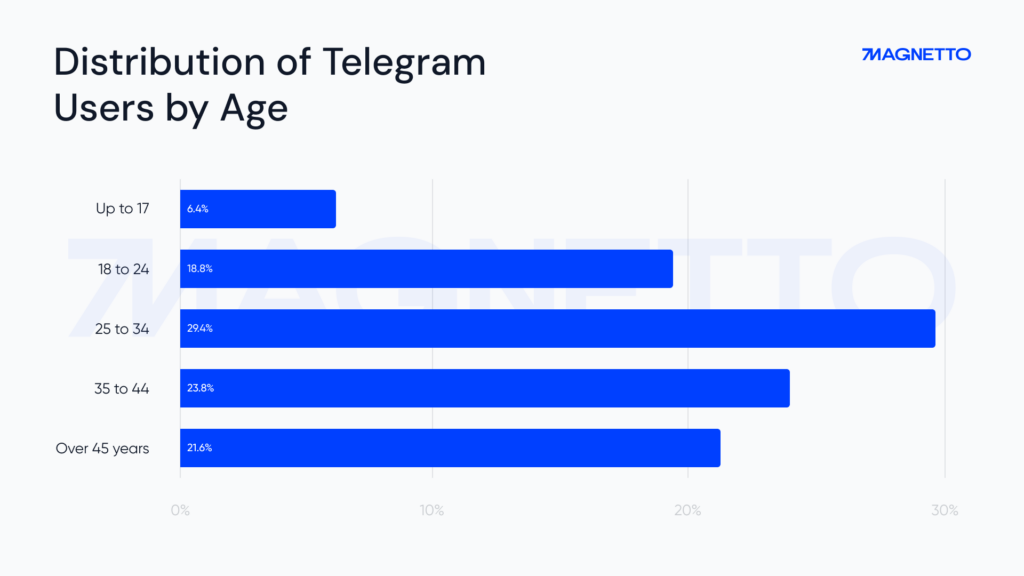
Distribution of Telegram users by age
What makes the India opportunity genuinely different from other markets is geography. Telegram penetrates deeply into cities where Meta’s high CPMs make many performance campaigns economically unviable. At Magnetto.com, we observe that Tier 2 and Tier 3 India are where Telegram’s engagement rates consistently outperform. Audiences in Lucknow, Coimbatore, Surat, and Bhubaneswar remain actively underserved by conventional digital spend.
Another thing that matters even more is how people use the platform. User behavior on Telegram stands apart from mainstream platforms like Instagram.
- People come with intent.
They join channels for market updates, discounts, exam preparation, investment discussions, product alerts, educational content, entertainment communities, and niche interests. Nearly half of Telegram users regularly follow 6–15 channels, and over 37% receive push notifications from 1 to 5 channels.
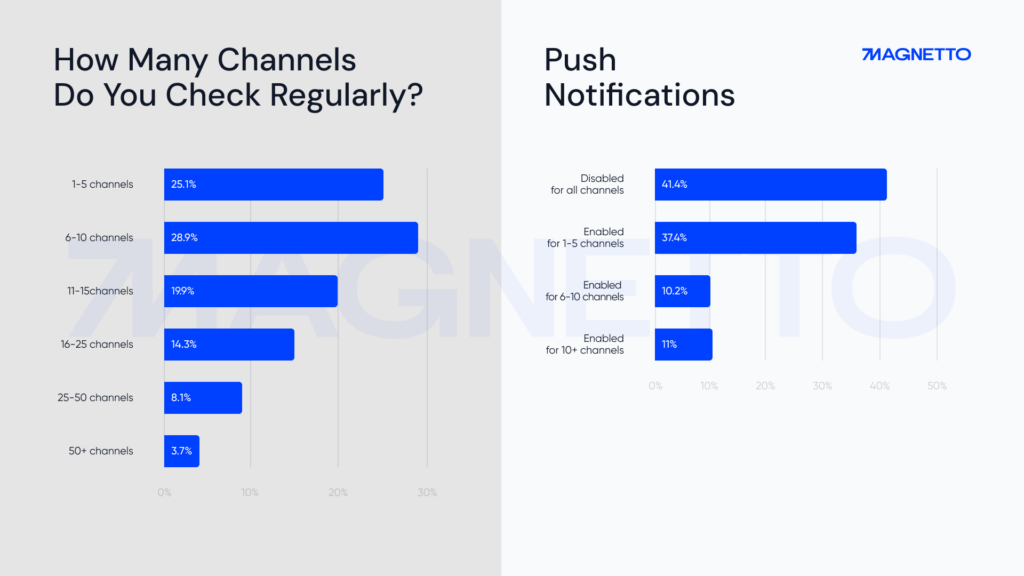
Telegram Channel Insights
- Users stay because information arrives directly.
India’s Telegram ecosystem has evolved into something closer to a hybrid of WhatsApp, Reddit, newsletters, and community commerce. Students use it to access study materials and educational communities, finance audiences follow stock and crypto updates, deal seekers subscribe to discount channels. That’s why more and more brands in 2026 use channels to distribute offers, announcements, and loyalty content at scale.
Technically, Telegram also supports features many Indian users already value:
- cloud-based access across devices,
- file sharing up to 2GB per upload,
- public groups supporting up to 200,000 members,
- broadcast-style channels with unlimited audience scale.
That matters because advertisers do not need to create demand as the demand already exists. They only need infrastructure to reach it.
The CPM Gap That Advertisers Cannot Ignore
Telegram Ads operate on a bid-based model. Advertisers compete for placement by setting CPM bids across target channels and audiences. There are two major ways to advertise on Telegram: via Euro accounts and TON accounts.
TON accounts come with a set of limitations such as restricted geotargeting, few landing page options, slow moderation, and complex setups. Euro accounts are the opposite — they’re built for flexibility and scale. Broader targeting, faster approvals, and expanded landing page options make them highly effective for running and scaling campaigns.
When comparing Euro and TON ad accounts, Euro accounts consistently deliver stronger and more predictable performance. However, most advertising agencies only have access to TON accounts, which limits targeting flexibility and overall campaign efficiency.
As a direct Telegram infrastructure partner, we provide full coverage of the Indian market through Euro ad accounts, which are not accessible to most agencies. CPM rates start at just €0.03, while campaigns reaching larger audiences typically cost around €0.10 CPM, depending on the topic and competition.
One Indian brand we supported with access to our Euro ad accounts had a clear objective: acquiring 500,000 Telegram followers in 60 days while reducing acquisition costs. The campaign initially ran on a TON account, which resulted in high acquisition costs. After switching to Euro account with more advanced targeting capabilities and lower CPMs, the brand reached its target audience more effectively and scaled high-performing ads quickly. Within two months, the campaign achieved the original target of 500,000 new followers and continues to scale beyond that.
Five Use Cases Indian Advertisers Should Test Right Now
The use case map for Telegram advertising in India is wider than most brands assume. Here is where the opportunity is sharpest:
- D2C and E-commerce: Flash sale communities, curated deal channels, and loyalty subscriber groups are native Telegram formats. For brands targeting Tier 2 and Tier 3 India where trust in brand-direct channels runs higher, Telegram offers an intimacy that feed-based social simply cannot replicate.
BFSI and Fintech: Finance is one of Telegram’s most active channel categories in India. Stock analysis groups, insurance advisory communities, and crypto discussion channels attract highly engaged, financially motivated audiences. For category CPMs, the efficiency gains are particularly stark.
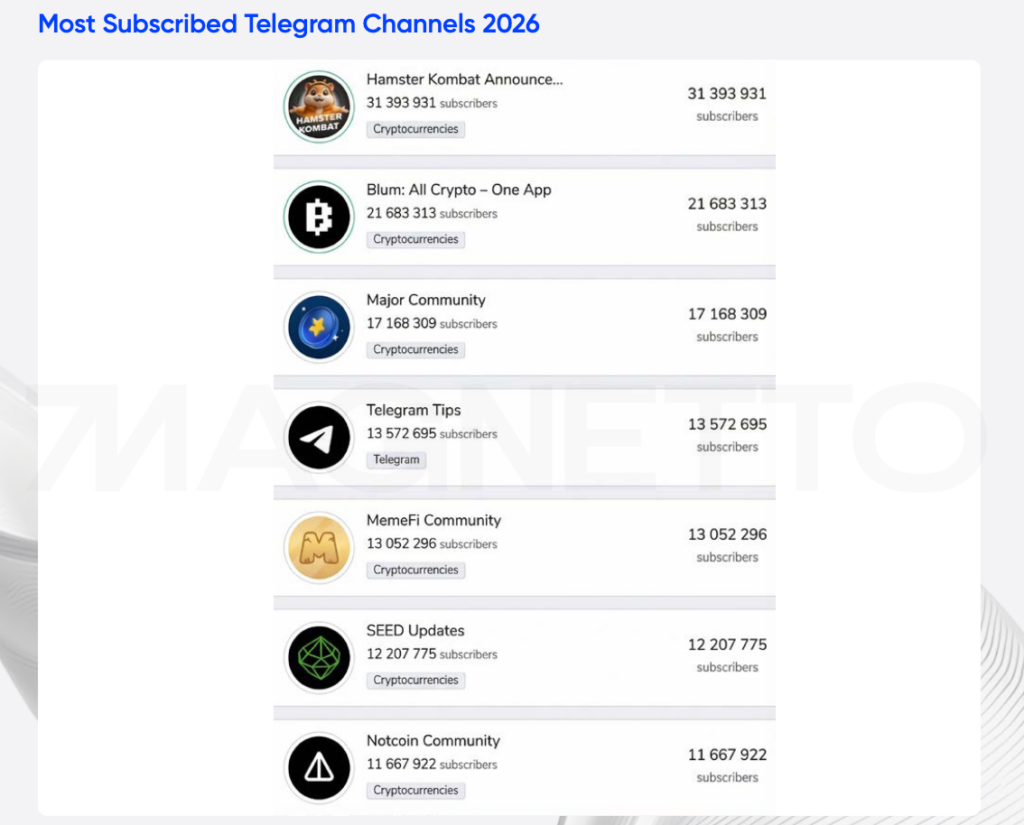
- EdTech: Course promotion, free resource funnels leading to paid community upgrades, and JEE or UPSC prep communities represent an almost frictionless funnel structure.
- Media and Regional Content: News channels, local content communities, and podcast audiences cluster naturally on Telegram. For publishers and OTT platforms looking to drive app downloads or subscriptions, Telegram’s algorithmic transparency (there is no feed to fight) is a genuine structural advantage.
- Gaming and Fantasy Sports: Telegram’s young, male-skewed user base is a near-perfect match for the fantasy cricket and rummy category. The combination of community channel targeting and performance-oriented CPMs makes this arguably the single most underexploited vertical in Indian gaming marketing.
Three Most Common Concerns Brands Have About Telegram Ads
Media buyers in India often have questions about Telegram, and that’s fair. After hundreds of campaigns, we’ve seen the same concerns come up again and again. Here are the top three pain points brands face, and how to address them:
- Brands are not able to track conversions.
This is the most common concern, and it comes from assuming Telegram works like a walled garden. It does not. Every ad can carry UTM parameters that feed straight into your existing analytics stack — Google Analytics, AppsFlyer, whatever you are already using. On top of that, Telegram’s native channel analytics give you view counts, follower growth curves, and engagement data at the post level. For brands running subscriber acquisition campaigns, bot-based tracking lets you fire conversion events at the moment a user takes a specific action inside a channel. The attribution picture is not identical to Meta Ads Manager, but it is complete enough to optimise against — and the tooling is improving every quarter.
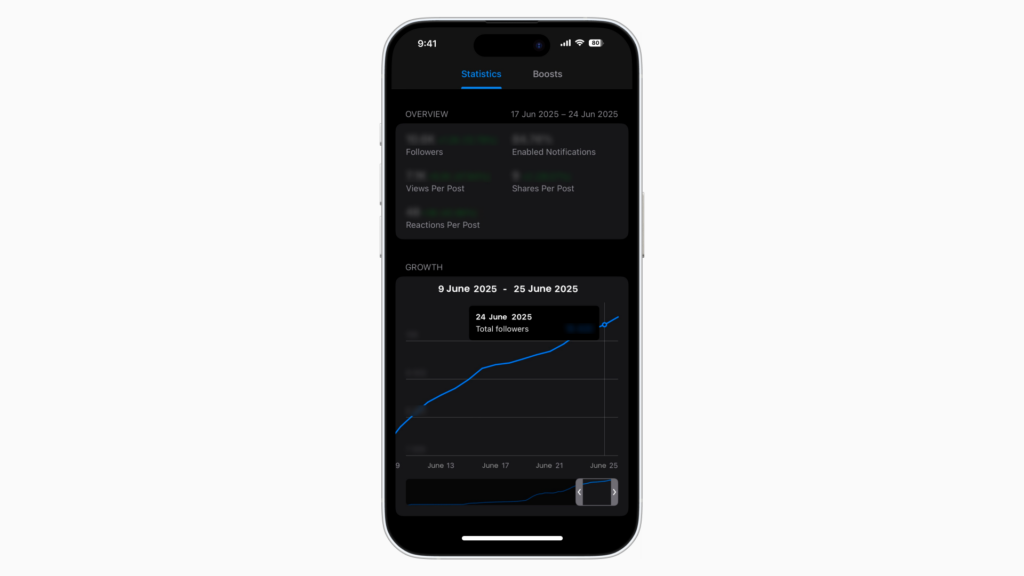
A Telegram channel statistics
2. Brands worry their reputation can be harmed by unsafe ad placements.
This concern makes total sense on platforms where you are bidding into an algorithmic auction with no visibility into placement. Telegram works differently. Its advertising model is channel-based: you target specific channels or category clusters, and your ad appears only there. You are not surrendering placement control to a black box. You are choosing your context, and if a channel does not meet your brand standards, you simply exclude it. That is brand safety built into the architecture.

Channel-based targeting is brand safety built into the model — you choose where you appear.
3. Telegram Ads can feel complicated, and many advertisers simply do not know where to begin.
This is the most honest objection. Telegram’s direct buying requires a €2 million minimum, which immediately closes the door for most Indian brands. The moderation process has its own rhythms. The targeting logic is different from what businesses have spent years mastering on Meta. These are real pain points, but they are already solved by an experienced agency partner with direct Telegram infrastructure access that allows brands to launch Telegram Ads quickly and at efficient costs. Moreover, it brings deep expertise and proven strategies that would otherwise take months to build internally.
Telegram in India: Low Competition, Cost-Efficient CPMs, Strong Outcomes
At Magnetto.com, we work with the Indian market on a daily basis and observe their market trends every week. And what we see is a gap that is slowly beginning to close.
International advertisers have started to notice the scale of Telegram in India. The CPM advantage that makes this moment special comes down to relatively low competition. But once competition enters the system, it rarely disappears; it only drives prices up.
The brands that move now will build strong channel audiences, sharpen their creative playbook, and establish cost baselines that will be hard to replicate in two years. The brands that wait will face rising Meta Ads costs and wonder where the efficient inventory went.
That is why it’s time Indian advertisers step in and take advantage of this channel.
Read also: The Anatomy of Tanishq’s Akshaya Tritiya Campaign — Emotion, Reach & ROI
About the Author:

Alex Malgin, CEO, Magnetto
