











Creator-Led D2C Brands: The New Playbook for Product Launches in India

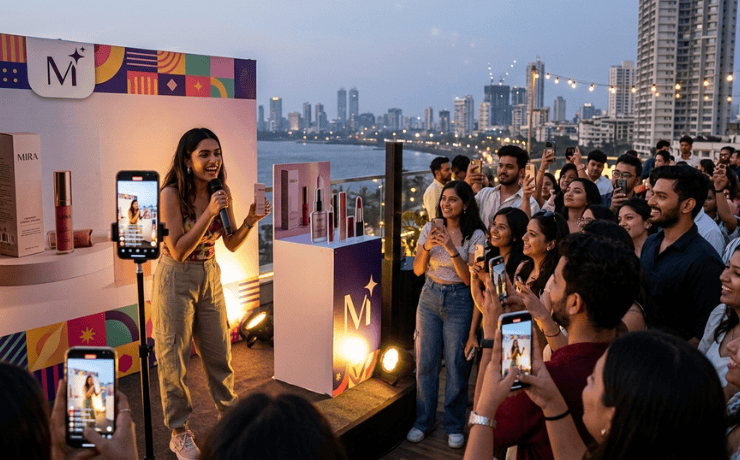
There was a time when celebrity endorsements sat at the edge of business strategy. A famous face promoted the product, agencies built campaigns around visibility, and the actual company operated separately behind the scenes. That distinction is disappearing fast in India’s digital economy. Today’s creators are no longer just influencing purchase decisions; they are building the products themselves, owning distribution, shaping brand narratives, and cultivating communities that behave less like audiences and more like highly engaged consumer ecosystems. The rise of creator-led D2C brands is one of the most important structural shifts unfolding across India’s startup and advertising landscape because it fundamentally changes how products are launched, marketed, and scaled. The old playbook relied heavily on media spending to create awareness. The new one often begins with trust that already exists. Whether it is beauty, nutrition, fashion, personal care, wellness, food, or lifestyle categories, creators are increasingly converting years of audience attention into commercial businesses with remarkable speed. And unlike traditional startups that spend heavily to acquire customers from scratch, creator-led brands often enter the market with built-in distribution, consumer familiarity, and a highly responsive feedback loop. “The modern creator is not renting attention anymore; they are monetising community,” as one investor recently remarked at a D2C summit. That observation captures why this model is becoming far more than a passing ecommerce trend. It represents a deeper shift in how consumer trust itself is being commercialised in the digital era.
What makes the Indian market particularly fertile for creator-led D2C businesses is the convergence of three powerful forces: massive digital consumption, low barriers to commerce infrastructure, and the emotional intimacy creators have built with audiences over time. India’s creator economy has matured far beyond viral entertainment content. Many creators today operate like niche media companies with highly segmented audiences built around fitness, skincare, finance, parenting, technology, fashion, food, or regional culture. Their followers are not merely passive viewers scrolling through content feeds. They actively seek recommendations, emulate purchasing behaviour, and often trust creators more than polished advertising campaigns from established corporations. This dynamic becomes commercially potent when creators launch products that feel like natural extensions of their online identity. A fitness creator introducing supplements, a beauty influencer launching skincare, or a food creator building packaged products already enters the market with contextual credibility. That dramatically compresses the traditional customer acquisition cycle. In many cases, the creator’s content itself becomes the marketing engine. Product testing, development conversations, behind-the-scenes storytelling, and customer feedback loops are integrated directly into content ecosystems long before formal launch campaigns begin. The audience does not experience the brand as an external advertisement. They experience it as part of an ongoing relationship. That distinction is incredibly important because digital consumers, especially younger audiences, have become increasingly resistant to overt marketing while remaining highly responsive to perceived authenticity.
The implications for advertising and brand-building are enormous because creator-led D2C businesses operate on fundamentally different economics compared to traditional consumer brands. Historically, product launches required significant investment across distribution, retail visibility, celebrity endorsements, and mass media campaigns to generate awareness at scale. Creator-led brands invert that process. Awareness often comes first through years of consistent audience-building, while commerce infrastructure is layered afterward. In practical terms, this means many creator-led startups can achieve meaningful traction with far lower initial marketing spends than conventional D2C entrants. But there is another advantage that often goes unnoticed: speed. Traditional brands typically move through long cycles of consumer research, agency development, media planning, and campaign execution before testing market response. Creators operate in real time. They understand audience sentiment instantly through comments, engagement patterns, direct messages, and community interactions. Product positioning evolves dynamically because the creator is continuously observing how the audience reacts. This creates a level of agility that many legacy consumer brands struggle to replicate. Some of the most successful creator-led launches in India have not necessarily succeeded because the products were radically different. They succeeded because the storytelling, trust, and audience alignment were already established before the product even existed. That is forcing traditional advertisers to rethink how influence works. Influencer marketing once functioned as a supporting media tactic attached to larger campaigns. Increasingly, creators themselves are becoming vertically integrated consumer brands with their own distribution ambitions. For agencies and marketers, this changes the role creators play within the ecosystem—from amplifiers of brands to competitors for consumer attention and wallet share.
Still, the creator-led D2C boom should not be romanticised as an automatic formula for success. Building audience trust and building sustainable businesses are not always the same skill set. The market is already beginning to separate creators with genuine brand-building capability from those relying purely on temporary internet visibility. Consumer expectations rise quickly once money changes hands. Product quality, fulfilment, customer support, operational consistency, pricing strategy, and long-term differentiation ultimately matter far more than follower counts. Audiences may buy once because they admire a creator, but repeat purchases depend on whether the product genuinely delivers value. That is where the next evolution of the ecosystem will likely happen. The most successful creator-led brands in India may not necessarily be the loudest or most viral. They will be the ones capable of combining community trust with operational discipline and long-term brand thinking. Investors are already becoming more selective, moving beyond vanity metrics toward retention rates, customer lifetime value, and sustainable margins. At the same time, larger consumer companies are paying close attention because creator-led brands reveal something uncomfortable about modern advertising: consumers increasingly trust individuals more than institutions. In a fragmented digital landscape where attention is expensive and authenticity is scarce, creators have managed to build something many corporations struggle to manufacture—genuine audience connection. That is why creator-led D2C is not simply a trend about influencers selling products online. It is a sign that commerce itself is becoming more personality-driven, community-led, and culturally embedded. And for India’s advertising and startup ecosystem, that may end up redefining the entire playbook for how brands are launched in the years ahead.
