












Goafest 2026: The In-Housing Trend Is Not a Threat to Agencies. It Is a Verdict.

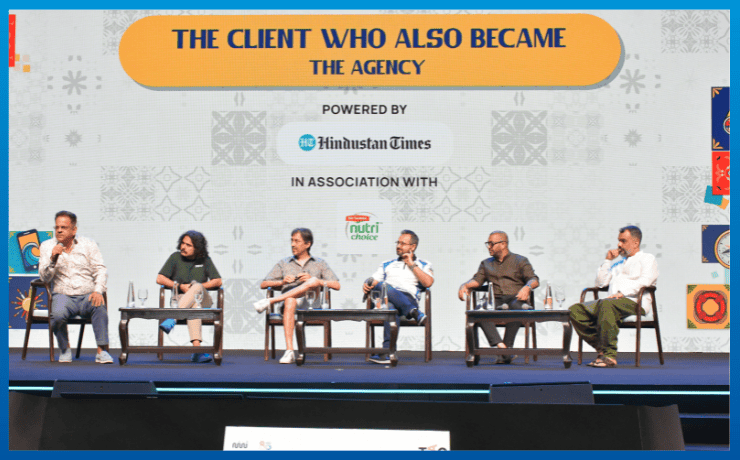
The session was called ‘The Client Who Also Became the Agency.’ That title alone should have made every agency person in the room uncomfortable. Framing a brand’s decision to build in-house as becoming an agency is a polite way of saying: the agency was no longer delivering what the brand needed, so the brand built it themselves.
Chandan Mendiratta of Zepto described a marketing setup where social media comments and real consumer behaviour inspire campaigns within minutes. Not after a brief, a creative review, a round of revisions, and a client presentation. Minutes. And the benchmark Zepto has chosen is not an advertising agency. It is a content creator. Creators, by definition, do not need agencies. They have a point of view, a phone, and an audience. When a major Indian brand starts describing itself in those terms, the industry should pay attention.
Harsh Deep Chhabra of Godrej Consumer Products described something even more significant. Godrej went from being among the top 20 advertisers in India to one of the top 4, while increasing campaign output from roughly 10 per month to nearly 30. The mechanism was in-housing. The reason was not cost. It was that business data, growth KPIs, and strategic insights are deeply integrated internally. Keeping that intelligence inside the company and building the creative function around it proved more effective than briefing an external agency that only ever sees part of the picture.
“Brands move work in-house when agencies fail to meet expectations around speed, relevance, or execution.” — Ajay Kakar, Adani Group
Ajay Kakar of Adani Group said it plainly. That is not an indictment of the agency model as a concept. It is a description of what has happened inside the model in too many places. Agencies built processes. They added layers. They optimised for the kind of work that gets approved rather than the kind that gets remembered. And brands, who are paying the bills and watching the results, noticed.
Raj Kamble of Famous Innovations made the defence of agencies that needed to be made, and it is a genuine one. Outside perspective. Creative friction. The courage to disagree with a client when the client is wrong. Those things are real and valuable. An in-house team, by definition, is inside the culture it is trying to comment on. That is a creative limitation. The best brand work often comes from someone who sees the brand the way a consumer sees it, not the way the brand sees itself.
But here is the problem with that defence. It describes what agencies are capable of at their best. It does not describe what most agencies actually deliver most of the time. The creative friction Kamble describes requires an agency culture that protects and rewards disagreement. That is not the culture that billing targets and global network compliance requirements tend to produce.
Gaurav Ramdev of Visa offered what is probably the most realistic picture of where this ends up: a hybrid model. Long-term brand strategy sitting with an external agency that has the distance and creative independence to challenge the client. Fast-moving daily content sitting with an in-house team that has the speed and cultural proximity to respond in real time. Both things, working together.
That is a reasonable outcome. It is also a significantly smaller brief for the external agency than the full-service model that built the industry. The agencies that understand this and position accordingly will find a sustainable future in it. The agencies that keep defending the old model as if the last decade did not happen will keep losing ground and keep being surprised when they do.
The in-housing conversation at Goafest 2026 was not really about in-housing. It was about whether agencies have been honest with themselves about why it is happening. The ones that have are already adapting. The ones that have not are still calling it a threat.
Read also: Goafest Day 2: Big Questions, Honest Conversations, and an Awards Night That Leo India Made Its Own.
