














Goafest 2026: The Measurement Problem Is Not Technical. It Is a Conflict of Interest.

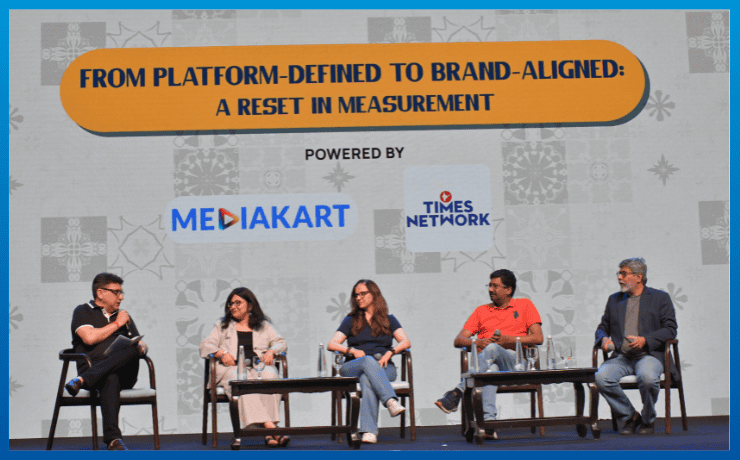
There is a phrase that Dhiraj Gupta of mFilterIt used at Goafest on Day 3 that the advertising industry should print and put on the wall of every planning meeting. The maker cannot be the checker, and the checker cannot be the maker. He was talking about measurement. He was also describing something the industry has known for years and largely looked away from.
Platforms sell advertising inventory. They also provide the tools most brands use to measure whether that inventory worked. These are not independent functions. The same company that benefits from a campaign being declared successful is the company providing the dashboard that declares it successful. In any other industry, this would be an immediately visible problem. In advertising, it has become infrastructure.
Aditi Mishra of Lodestar made the point that follows logically from this: platform metrics are tools, not verdicts. A high click-through rate tells you something happened. It does not tell you whether the brand grew. A low cost per acquisition looks efficient on a slide. It does not tell you whether the customer was worth acquiring or whether they will return. The metric and the outcome it is supposed to represent are often not the same thing. But the metric is what gets reported to leadership, and the outcome takes years to measure, so the metric wins the argument.
“Consumers buy products, not algorithms.” — Aditi Mishra, Lodestar
That line is worth keeping. Because the entire logic of digital advertising optimisation is built around the assumption that improving the metric improves the outcome. Sometimes that is true. Often it is not. A campaign can have outstanding viewability numbers and no sales impact. A brand can improve its ROAS quarter over quarter while its long-term equity slowly erodes. The dashboard looks healthy. The brand is quietly getting weaker.
Neha Markanda of ShareChat made a point that should be obvious but is applied inconsistently across the industry: different platforms solve different business problems and cannot be evaluated on the same metrics. A social platform and a search platform and a television channel are doing fundamentally different things in the consumer journey. Holding them all to a cost-per-acquisition standard is not rigorous measurement. It is the application of one platform’s logic to every other platform, which produces data that is internally consistent and practically misleading.
Shahad Anand of Mediakart said what the best planners already know: measurement exists to support business objectives, not to become the objective itself. The moment a team starts optimising for the measurement rather than the outcome it represents, the measurement has failed at its actual job. And this happens constantly. Not because planners are incompetent, but because the incentive structures reward improving the number rather than improving what the number is supposed to reflect.
The deeper issue that nobody said directly but that runs underneath the whole conversation is this: the metrics that are easiest to report to leadership are not the same metrics that best predict long-term brand health. Attention, trust, cultural relevance, and purchase intent over time are all measurable, but they require methodology, longitudinal thinking, and the willingness to sit with ambiguous results. ROAS is on the dashboard by morning. So ROAS wins, even when the strategy says it should not.
The solution is not to abandon metrics. It is to be more honest about what each metric can and cannot tell you, to demand independent verification from parties who have no stake in the outcome, and to build measurement frameworks that connect to how brands actually grow rather than to how platforms prefer to be evaluated. That requires the industry to push back on the platforms it depends on for reach. It is an uncomfortable position. It is also the right one.
Read also: Goafest 2026: The In-Housing Trend Is Not a Threat to Agencies. It Is a Verdict.
