












Goafest 2026: AI Is Not Replacing Agency Creativity. It Is Eliminating the Revenue Model That Paid for It.

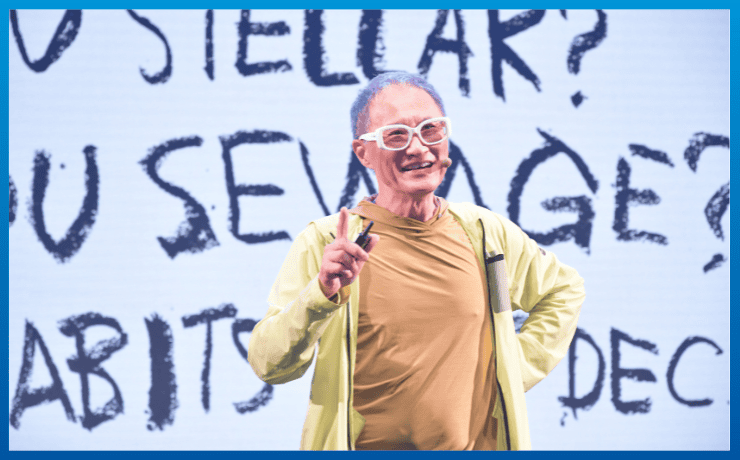
Eugene Cheong, Creative Director at Euge Publishing, delivered the most structurally honest session of Goafest Day 3. He did not talk about AI as a tool or a threat or a creative partner. He talked about what AI is doing to the business model of advertising agencies, and the answer is precise and uncomfortable.
The traditional agency, he argued, ran on a pyramid. At the top, roughly 10 percent of work: breakthrough global creative that won awards, built agency reputation, and justified the relationship. In the middle, around 20 percent: strong, culturally impactful campaigns that built client trust and produced results over time. At the base, the 70 percent: repetitive, execution-heavy work. Version control. Adaptation. Production. The work that nobody puts in the reel but that generates the majority of the revenue.
That 70 percent is disappearing. Not gradually. Fast. AI is handling production and adaptation. In-house teams are handling rapid content. Automation is handling what used to require a team of people and several weeks. The agencies that built their headcount, their office sizes, their cost structures, and their pricing around that 70 percent are facing a revenue problem that a few award wins cannot fix.
“The future belongs to agencies driven by talent, courage, intuition, and original thinking. Because those are the things AI cannot automate.” — Eugene Cheong
Adam Izen, Chief Awards Officer at The One Show, made the same argument from a global perspective. Indian advertising became a creative force internationally through bravery and conviction, not through safety and process. The work that put Indian agencies on the world map was the 10 percent at the top of the pyramid. The question Izen was implicitly asking, and that Cheong was asking explicitly, is whether the industry has been genuinely building and protecting that 10 percent or whether it has been using the awards and the reputation to justify the 70 percent underneath.
This is a harder question than it sounds. Because the comfortable version of the AI story, the one most agency leadership is telling their own organisations, is that AI is a productivity tool that makes the existing model more efficient. You produce the same work faster and cheaper. The business model stays the same. The comfortable version is wrong.
The less comfortable version is that AI is eliminating the revenue base that most agencies have actually been running on, while leaving intact only the part they have always claimed to be their core value. If that core value, the genuine 10 percent creative excellence, was always there and always protected, then the transition is painful but survivable. If the 10 percent was mostly a story told to justify the 70 percent, then the transition is existential.
Ashish Khazanchi of Enormous added something important in his Day 3 session on fearless creativity. Digital media has significantly reduced the cost of failure. The old justification for playing safe, that a failed campaign means an unrecoverable brand disaster, is far less true than it used to be. Brands can test, iterate, and course-correct faster than at any point in advertising history. The cost of being wrong has come down.
Yet the creative brief has not become braver. The approval process has not shortened. The culture of pre-empting client reactions, market responses, and competitive moves persists even in an environment where experimentation is cheaper than it has ever been. Khazanchi’s conclusion is that the caution is not rational. It is cultural. Agencies have been playing safe not because safe is the smart strategic choice but because safe is the culture that scale and process tend to produce over time.
Put Cheong, Izen, and Khazanchi together and the picture that emerges is this: the 70 percent is going. The 10 percent is what remains. And the cultural conditions that allow the 10 percent to exist, genuine creative courage, the protection of bold thinking, the willingness to tell a client they are wrong, are precisely the conditions that the industry’s own growth and scale have been quietly eroding. The industry needs to rebuild those conditions not as an aspiration but as an operational priority. There is no longer a 70 percent to subsidise the aspiration.
Read also: Goafest 2026: The Measurement Problem Is Not Technical. It Is a Conflict of Interest.
