














Goafest 2026: Advertising Helped Build the Outrage Economy. Now It Cannot Compete With What It Created.

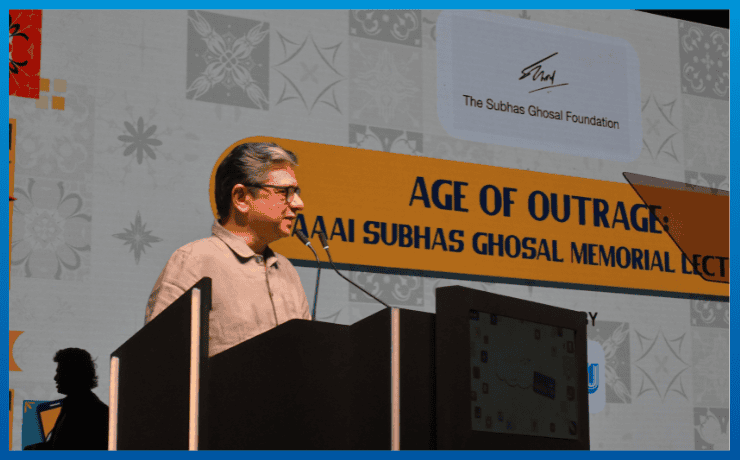
The AAAI Subhas Ghosal Memorial Lecture is one of Goafest’s most prestigious moments. This year it went to Santosh Desai of Think9, and he chose to use it to say something that took genuine courage to say in that particular room, in front of that particular audience.
His argument, stripped to its core, was this: advertising did not just reflect the culture. It shaped it. And one of the things it shaped was the attention economy that advertising now finds itself unable to compete within.
The mechanism he described works like this. Over decades, advertising shifted from selling products to selling identity. It taught consumers that their choices were expressions of who they were. The brand you buy, the car you drive, the coffee you order, all of it became a statement about the kind of person you are and the kind of person you are not. That was enormously effective at building brand value. It was also, at scale, a way of teaching hundreds of millions of people to define themselves through acceptance and rejection, through belonging and exclusion.
Social platforms took that logic and gave it an algorithmic accelerant. Identity-based consumption became identity-based expression. And the emotion that travels furthest and fastest in an identity-driven environment is not aspiration or joy. It is outrage. Because outrage is the fastest way to signal who you are and who you are against. The platforms did not invent that dynamic. They amplified a dynamic that had been carefully constructed and refined by advertising for decades.
“While the world has never needed storytelling more, advertising buried creativity under bureaucracy, processes, and award culture just as creators and digital platforms mastered the very storytelling techniques the industry originally invented.” — Santosh Desai
That second part of his argument is where it lands hardest. The techniques that built advertising, emotional storytelling, cultural insight, character, authenticity, the ability to make someone feel something real in thirty seconds, are now being deployed most effectively by individual creators with phones and genuine points of view. Not by agencies with 300 people, global compliance requirements, and twelve rounds of client approval.
The industry that invented those techniques is losing to people who learned them from the industry’s own best work and are applying them with less fear and fewer gatekeepers. A creator does not have a legal review. A creator does not have a brand safety checklist written by a committee. A creator has a perspective, an audience that chose to follow them, and the freedom to say what they actually think. That is the creative environment advertising used to have and gradually bureaucratised out of existence.
Desai’s observation is not that the industry is failing because of bad people or bad intentions. It is that the industry’s own success created the conditions for its diminishment. The more advertising professionalized, the more it added process. The more it added process, the more it filtered out the unpredictable, risky, uncomfortably honest work that made it powerful in the first place. And while the industry was adding layers of approval and optimising for what gets through the process, creators were producing the kind of raw, specific, human work that connects with people the way advertising used to.
The awards culture he mentioned is worth examining honestly. Goafest exists partly to celebrate creative excellence, and that is a genuine and valuable thing. But awards also create a category of work that is made to be awarded. Case study films that are better crafted than the underlying campaigns. Entries that represent a tiny percentage of what an agency actually produces in a year. Work that looks brave in a three-minute video and was, in the original brief, considerably more cautious. The jury sees the film. Nobody sees the brief.
None of this means advertising is finished or that agencies cannot find a way forward. Santosh Desai was not delivering a eulogy. He was delivering a diagnosis. And a diagnosis, delivered honestly, is more useful than reassurance. The industry that heard his lecture and asks itself hard questions about what it has allowed to happen to its own creative culture is in a better position than the industry that applauds the sentiment and goes back to the same briefing process on Monday morning.
The creators who are outperforming advertising today did not build better technology. They did not have bigger budgets. They had something simpler and harder to manufacture: genuine points of view, authentic voices, and the freedom to use them. Those are not things the industry can acquire. They are things it has to rebuild from the inside, by protecting the conditions that allow real creative thinking to happen and by being willing to accept the discomfort that comes with it.
Advertising taught the world to define itself through choices. The most important choice the industry can make right now is whether to keep doing what is comfortable or to do what it knows is necessary. That is not a strategic question. It is a character question. And Goafest 2026, at its best moments, asked it plainly.
