










Are Specialist Agencies Replacing Full-Service Models?

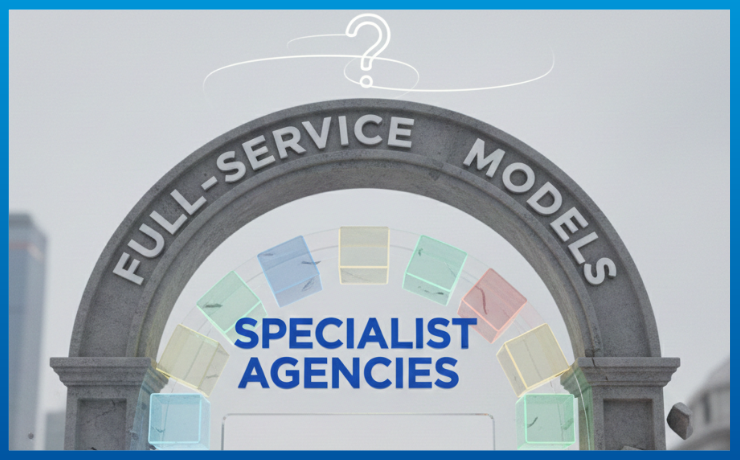
A few years ago, if a brand said they were looking for a “full-service agency,” no one questioned it. It was the default brief. One agency, one relationship, one team that would handle everything from ideas to execution. Simpler times. Today, that phrase still appears in pitch decks and RFPs, but it doesn’t always mean what it used to. More often than not, brands are quietly building their own mix of partners — a performance agency here, a social or creator specialist there, maybe a brand or strategy shop on top. From where I sit, working day-to-day with social mandates, this shift hasn’t happened overnight. It’s been gradual, practical, and driven less by theory and more by frustration. Clients aren’t abandoning full-service models out of trendiness; they’re doing it because marketing has become too specialised to rely on broad promises alone.
The reality is that the scope of marketing today is nothing like it was even five years ago. Social media itself is no longer a single discipline. It’s content, community, creators, paid amplification, platform culture, and real-time reputation management — all running simultaneously. Add performance marketing, data, commerce integrations, and regional nuances into the mix, and the expectation that one agency team can be equally strong across everything starts to feel unrealistic. Specialist agencies exist because they focus. Their teams go deep instead of wide. They understand the mechanics, the language, and the pace of a particular platform or problem. For clients under pressure to deliver results quickly, that depth matters. It reduces guesswork. It shortens learning curves. And in many cases, it simply feels safer to trust someone who does one thing really well rather than many things adequately.
But the idea that specialist agencies are “replacing” full-service agencies is an oversimplification. Brands still struggle with fragmentation. Multiple partners mean multiple perspectives, priorities, and interpretations of the same brief. Without a strong central strategy, things fall apart fast. Brand voice becomes inconsistent. Efforts don’t always add up. Someone still needs to connect the dots. This is where full-service agencies continue to play an important role — though that role looks different now. The stronger full-service agencies I’ve seen are no longer positioning themselves as execution factories. Instead, they act as integrators. They lead strategy, define direction, and ensure that specialist partners are working towards a shared outcome rather than isolated wins. The value isn’t in “doing everything” anymore; it’s in making everything work together.
What’s changed most noticeably is how clients evaluate agencies. They’re sharper. They ask more questions. They can tell when recommendations are driven by actual expertise versus internal capability gaps. Specialist agencies often win trust quickly because their thinking feels specific. Full-service agencies earn trust when they demonstrate clarity — about what they lead, what they collaborate on, and where they bring the most value. The tension arises when agencies try to be something they’re not. A generalist trying to sound specialised, or a specialist trying to stretch beyond their core, usually gets found out. As Shashi Sinha, CEO of IPG Mediabrands India, has pointed out, “The future of agency models depends on clarity — clarity of purpose, capability, and partnership.” That clarity is still a work in progress across the industry.

This shift has also changed how talent thinks about agency life. Specialist agencies appeal to people who want depth — who want to master a craft, a platform, or a specific skill set. Full-service environments attract those who like variety, exposure, and big-picture thinking. Neither is inherently better. The problem starts when agencies promise one experience and deliver another. I’ve seen people join “integrated” agencies expecting learning across disciplines, only to end up siloed. I’ve also seen specialist agencies slowly overextend themselves to chase larger mandates, losing the very focus that made them attractive in the first place. Clients feel these growing pains too. Managing multiple specialist partners can deliver great results, but only if there’s strong ownership and alignment internally. Otherwise, coordination becomes the hidden cost.
So, are specialist agencies replacing full-service models? Not really. What’s happening is a reshaping of roles. Brands are no longer loyal to structures; they’re loyal to outcomes. They build ecosystems that suit their needs at that moment. Full-service agencies are being pushed to justify their relevance beyond scale. Specialist agencies are being challenged to think beyond execution and understand brand context. The agencies that will thrive are the ones that stop defending old labels and start defining their role honestly. In today’s market, success isn’t about being everything to everyone. It’s about knowing exactly what you bring to the table — and being very good at it.