













Why Short-Form Video Has Changed How Brands Think About Storytelling

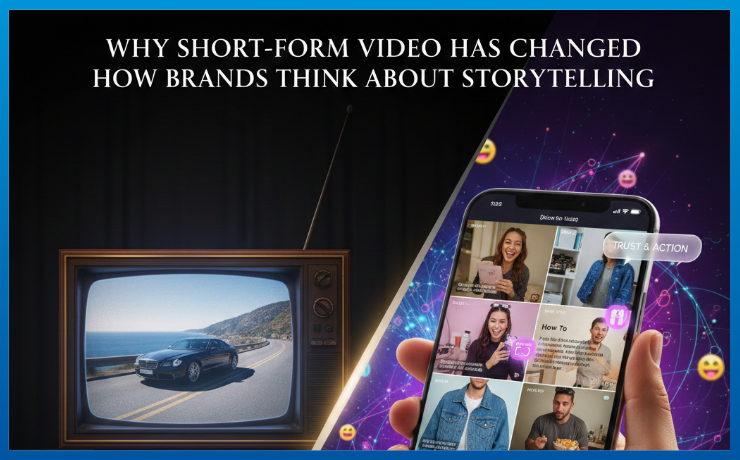
Somewhere between uploading daily posts, tracking engagement numbers, and scrolling through Reels late at night, it became clear that storytelling doesn’t work the way it used to. Brands no longer have the luxury of warming up an audience. On platforms driven by short-form video, the story either starts immediately or doesn’t start at all. People decide in seconds whether they care, and that decision is rarely logical. It’s emotional, instinctive, and often unconscious. As someone who works closely with social content, I’ve seen how this reality has quietly changed brand conversations. The focus has shifted from “What do we want to say?” to “Why would someone stop for this?” That difference may sound small, but it has completely altered how stories are shaped, edited, and shared.
Short-form video has forced brands to rethink narrative structure at its core. There’s no space for elaborate setups or layered messaging. What matters is clarity and relatability. A single moment, reaction, or idea often carries more weight than a full script ever could. Interestingly, the most effective videos don’t always look planned. They feel casual, sometimes imperfect, and often very real. This doesn’t mean strategy is missing, it means strategy is invisible. From a social media perspective, that’s the hardest part. You’re not just telling a story, you’re predicting behaviour. Will someone watch this past three seconds? Will they understand it without sound? Will it feel native to the platform? These are the questions shaping storytelling today, far more than traditional brand guidelines.
What’s also changed is how brands measure success. Short-form video isn’t just about views or likes, it’s about momentum. One good video can introduce a brand, spark curiosity, and lead people to explore more content on their own. Many campaigns now begin with short-form experiments rather than polished hero films. You test, observe, adapt, and repeat. That process has made storytelling more fluid and less controlled, which can be uncomfortable for brands used to precision. But it works. Gary Vaynerchuk once summed this up well when he said, “If you don’t know how to tell a story in short-form, you’re invisible to the next generation.”
That idea resonates because it reflects what’s happening on the ground. Short-form video isn’t a supporting format anymore, it’s often the first and most important touchpoint.

Perhaps the biggest shift is philosophical. Short-form video has made storytelling more human. It rewards honesty over perfection and relevance over polish. It allows brands to respond to culture instead of interrupting it. In a market like India, where audiences are constantly connected and quick to scroll past anything that feels forced, this matters deeply. Brands that succeed here don’t try to say everything. They say one thing well, at the right moment. Storytelling hasn’t disappeared, it has simply adapted to how people live now. Faster, yes, but also closer, more personal, and more real. For those of us working in social media, that challenge is demanding, but it’s also what makes this shift exciting. Every short video is a chance to be remembered, even if only for a few seconds.