












The AI-Powered Media Mix: Why CTV Is becoming the Most Intelligent Screen for Advertisers

If you’ve worked in marketing long enough, you start to notice how every few years, a new screen becomes the “main character.” We don’t officially announce it, but the shift happens anyway. TV held that title for decades. Then mobile phones arrived and pretty much swallowed our attention whole. But the way CTV has entered the picture feels… different. It’s not a flashy takeover or a big industry drumroll. It’s more like something that quietly settled into our routines without asking for permission.
Whenever I’m in a meeting with clients, the conversation almost always circles around the same pain points. Television gives reach, yes, but you never really know what’s happening behind that reach. Mobile gives data in ridiculous amounts, but the experience is so cluttered that even good ads get swallowed between notifications and random scrolling. CTV feels like a comfortable middle ground, except with a twist — it comes with AI doing all the stuff we humans don’t have the patience for.
What makes it interesting is that CTV is learning from viewers without viewers even realising it. On social media, people click, like, save, swipe — they leave a trail. On CTV, they don’t do anything obvious. They just watch. And yet, somehow the system still figures out when they’re paying attention, what they prefer when they’re tired, or what they watch when the whole family is around.
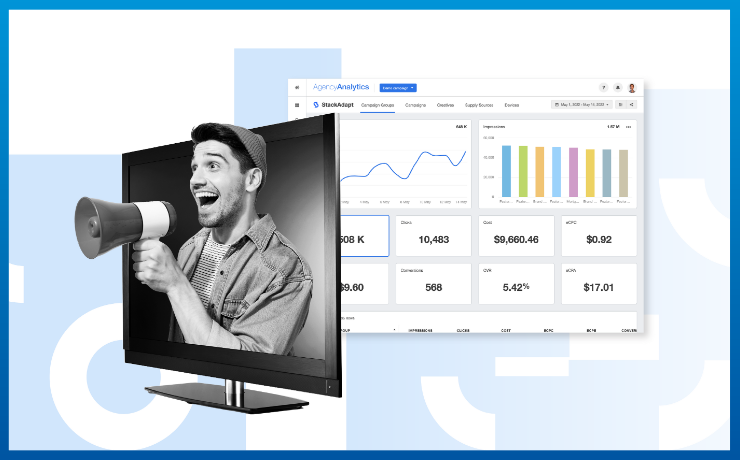
As someone who spends most of my day looking at dashboards full of signals, it’s almost funny to see a screen with no buttons send back such rich insight. It reminds me of old-school TV growing up, but smarter — like it finally matured after years of being the loud but clueless elder sibling in the media family.
AI: The Quiet Engine Behind CTV’s “Smartness”
AI is one of those words that gets thrown around so much that we forget where it actually matters. But with CTV, AI isn’t a garnish; it’s the main part of the recipe.
What AI picks up on CTV isn’t as literal as social media behaviour. Instead, it reads patterns — the time someone usually watches, whether they abandon shows quickly, how they move between genres, or how long it takes them to return to a particular series. You’d think this wouldn’t be enough, but it’s turning out to be more telling than explicit clicks.
And here’s the part that makes advertisers sit straighter in their chairs: AI links viewing behaviour to actual shopping. Not in a creepy “I know what you bought last night” way, but in a broader, more contextual sense. For example, someone who watches a lot of travel content during weekends often ends up browsing vacation-related products later. There’s a rhythm to it, and AI sees that rhythm far earlier than we do.
As a social media executive, I’m used to fast-moving optimisation — the kind where a campaign shifts based on real-time response. Seeing CTV evolve into that level of responsiveness is refreshing. It’s like TV finally caught up with the rest of us. And what I like most is that CTV doesn’t make the viewer feel stalked. Ads blend in. There’s breathing room. It feels more like curation than targeting.
Some of the most impressive things I’ve seen recently are where AI reads context instead of individuals — whether someone is binge-watching alone, co-viewing with friends, or just letting content play in the background. That context defines which ads appear, and honestly, it works better than chasing people across apps.
How CTV Is Changing Agency Thinking
A couple of years ago, CTV was that experimental box at the bottom of a media plan that everyone said “we can explore this if budget permits.” Today, it’s one of the first things discussed — and honestly, that change happened faster than I expected.
At my workplace, clients who used to swear by social-first campaigns now ask if their brand films can debut on CTV instead. It makes sense — it’s the screen where people are relaxed, not doom-scrolling. They’re not trying to multitask. Their brain is actually in a mode that’s open to storytelling.
This shift has also influenced the way creatives think. Not everything has to be a 5-second bumper ad anymore. Teams are experimenting with slightly longer narratives because they know people will actually watch. AI assures them the right audience will get the right story — not just a random mass of viewers.
There’s also something else that I think agencies appreciate more than they admit: attribution. For years, traditional TV promised impact but couldn’t prove much. Digital gave proof but sometimes felt emotionally thin. CTV, strangely enough, manages to combine both. The divide between “brand” and “performance” teams is finally softening. We’re seeing unified conversations instead of two parallel worlds.
From my perspective, CTV also expands the kind of thinking we do in social. Not every message needs to fight for attention with overly loud hooks. Some stories just need a bigger canvas. And CTV gives that without sacrificing the intelligence of digital.
The Future: A Screen That Learns, Adapts, and Stays Out of the Way
Looking ahead, I don’t believe CTV is here to replace mobile or traditional TV. I think it’s becoming the “thinking layer” in the media mix — the screen that ties everything together. As platforms mature, we’re going to see even more interesting possibilities:
• ads that adapt based on household habits,
• smoother continuity between CTV and mobile journeys,
• relevance based on what’s happening inside the content itself,
• predictive planning that tells advertisers when to scale or pause.
For brands, it means storytelling that is both emotional and measurable.
For viewers, it means ads that feel less disruptive.
For marketers like me, it’s simply exciting — a space where creativity doesn’t have to fight data but can actually benefit from it.
If mobile-first thinking defined the last decade, CTV might quietly shape the next one. Not by shouting for attention, but by learning — patiently, intelligently — from how people watch and live.