













How AI Is Transforming Media Planning in Indian Agencies


here is an old saying in the trading rooms of Mumbai’s financial district — that the market does not wait for the man who is still reading yesterday’s newspaper. Swap the trading floor for the planning rooms of India’s media agencies, and the axiom holds with startling precision. For decades, media planning in India operated on a foundation of intuition sharpened by experience: planners who had spent years reading audiences, negotiating inventory, and intuiting which channel would move which consumer. It was craft as much as science. Then came the data deluge — and, with it, the limits of what any human planner, however gifted, could meaningfully process. The arrival of artificial intelligence in the planning stack has not simply automated that work. It has fundamentally redrawn what the work actually is.
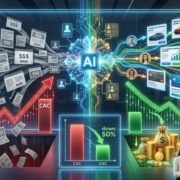
Across the country’s leading independent and network agencies — from GroupM’s operations in Gurugram to boutique performance shops in Bengaluru — AI-powered planning tools are quietly dismantling some of the industry’s most entrenched orthodoxies. Audience segmentation, once a labour-intensive exercise conducted quarterly and treated as gospel until the next refresh, is now a near-continuous process. Machine learning models ingest first-party data, third-party signals, browsing behaviour, and purchase intent in real time, surfacing micro-segments that no spreadsheet-driven planner could have identified in time to act on. The implications for campaign efficiency are significant: agencies that have moved AI into the core of their planning — not merely as a reporting layer, but as an active input to channel selection and budget allocation — are consistently reporting reductions in cost-per-acquisition alongside measurable lifts in reach quality. The old binary of reach versus relevance is dissolving. AI, it turns out, does not have to choose.
“AI does not replace the planner’s instinct — it gives that instinct a sharper instrument. The best media minds in India today are not those who resist the machine, but those who have learned to ask it better questions.”
What makes this transformation particularly consequential in the Indian context is the sheer complexity of the market AI is being asked to navigate. India is not a single media market — it is dozens of them, layered by language, geography, platform preference, and purchasing power, often within the same city block. A campaign that performs with precision in Tier 1 English-language digital environments may be entirely tone-deaf in vernacular markets across the Hindi belt or the southern states. AI’s ability to hold this complexity — to simultaneously optimise for a premium fashion brand’s Instagram presence in Delhi and its regional television buy in Tamil Nadu — represents a genuinely new capability for planning teams. Programmatic platforms have extended this into connected TV and streaming inventory, where algorithmic decisioning can now account for contextual signals that were previously invisible to planners: not just who is watching, but what they have been searching for, what the weather is doing, and what competitive advertising is running in adjacent slots. The granularity borders on the uncanny.
And yet, for all its computational power, AI in Indian media planning still rests on a foundation of human judgement — and the agencies that understand this distinction are the ones winning. The risk of over-indexing on algorithmic outputs is real and, frankly, already observable in some campaigns that are technically optimised but creatively and culturally inert. The machine learns from data; it does not yet understand aspiration. The most effective planning teams are those treating AI as a collaborative instrument rather than an autonomous authority — using it to stress-test assumptions, identify blind spots, and surface patterns that inform human strategy, not replace it. As India’s advertising economy continues its trajectory toward a projected ₹1.5 lakh crore by 2028, the agencies that will define the next decade are not those building the smartest algorithms in isolation. They are those cultivating planners who know which questions are worth asking — and who understand that the most powerful thing artificial intelligence can do is give a gifted human a much better starting point.
