



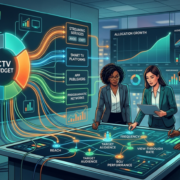




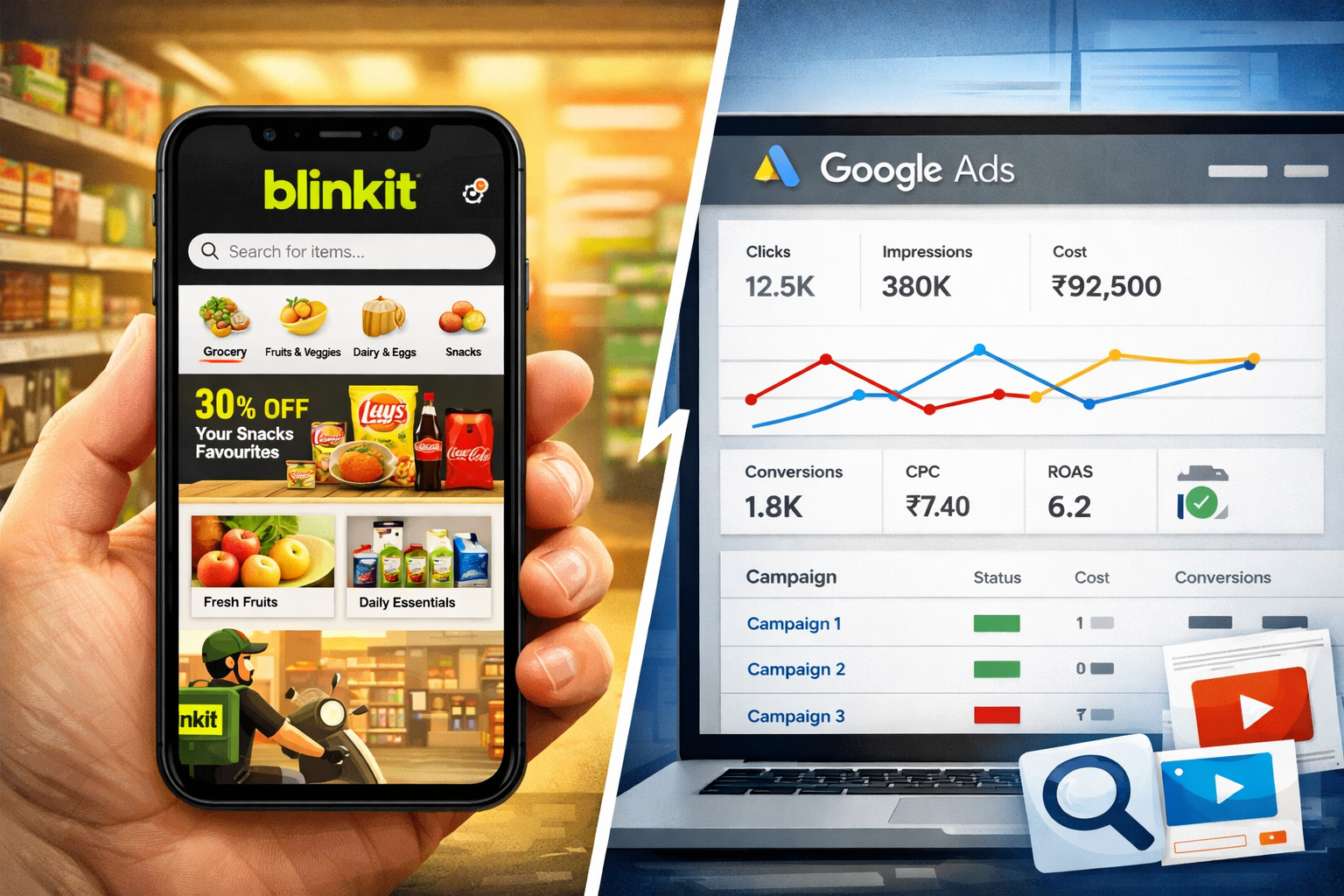
There is a media planner at a large FMCG company in Mumbai who told us something interesting a few months ago. She said her team used to spend the first hour of every planning meeting debating the Google vs Meta split. Now they spend it debating something else entirely: how much to put into retail media networks, and whether that money should come from the search budget, the social budget, or somewhere else.
That conversation is happening in conference rooms and on Zoom calls across Indian marketing teams right now. Retail media — advertising that lives inside shopping platforms — has moved from an experiment to a serious line item. The question is no longer whether to invest. It is how much, why, and what you are actually getting for it.
What retail media actually is
Strip away the jargon and retail media is simple. It is advertising that happens on a platform where people are already in a buying mindset. When you open Blinkit looking for milk and see a sponsored listing for a protein bar, that is retail media. When you search for shampoo on Amazon and the first three results are paid placements, that is retail media. When Swiggy Instamart shows you a banner for a new energy drink while you are checking out, that is retail media.
The reason brands find it compelling is the same reason it is different from everything else in digital advertising. On Google or Instagram, you are interrupting someone. On a retail platform, you are reaching someone who has already decided to spend money today. The intent gap — the distance between seeing an ad and actually buying something — collapses almost to zero.
The platforms that changed everything
India’s retail media story is being written by four players above everyone else: Amazon, Flipkart, and the two quick commerce giants — Blinkit and Zepto, with Swiggy Instamart not far behind.
Amazon and Flipkart have had advertising products for years. But what changed recently is the sophistication. Amazon Seller Services crossed ₹8,342 crore in advertising revenue in FY25 — up 25% year on year. Flipkart generated ₹6,317 crore from advertising in the same period. These are not small numbers. These are numbers that tell you brands are treating these platforms as core media channels, not afterthoughts.
The quick commerce platforms are a newer story and arguably a more interesting one. Blinkit, Zepto, and Swiggy Instamart have built advertising infrastructure at extraordinary speed. Brands can now target customers browsing for groceries at 11pm, serving ads for products that arrive within ten minutes. The behavioural signal is as clean as it gets — someone actively shopping, right now, on a category your product lives in.
What traditional digital still does better
None of this means Google and Meta are in trouble. They are not. But it is worth being honest about what they are and are not good at.
Search advertising on Google remains the most efficient way to capture demand that already exists. If someone types “best running shoes under ₹5,000” into Google, you want to be there. That intent signal is real and the conversion path is well understood.
Meta — Instagram and Facebook — does something different. It creates demand. It puts your product in front of people who were not thinking about it. For brand building, for new product launches, for reaching audiences who do not yet know they need what you are selling, there is still nothing quite like a well-targeted Instagram campaign with strong creative.
Where the real opportunity is being missed
Here is what most brand marketers are getting wrong about retail media right now. They are treating it purely as a performance channel — a way to win the search result inside an app. That is the smallest version of what it can do.
The better brands are using retail media data to inform everything else. When you know that your product gets the most add-to-carts on Friday evenings in Bengaluru, that tells you something about where to run your Meta ads and when. When you see that customers who buy your product through Zepto also consistently buy a particular competitor brand, that is a creative brief. Retail media data is not just for retail media. It is a signal layer that can improve decisions across your entire media mix.

Most brands do not have this pipeline yet. The agencies that figure out how to build it will have a real competitive edge for the next few years.
A practical question for media planners
If you are sitting down to plan a brand’s media mix for the next quarter, here is a useful frame. Ask three questions about each channel: Does it reach people who are already buying? Does it reach people who might buy? Does it reach people who have never considered buying?
Retail media is almost entirely in the first bucket. Search straddles the first and second. Social is mostly the second and third. You need presence across all three. The mistake is over-indexing on awareness at the cost of conversion, or vice versa.
The brands that are winning right now are not the ones who found a magic channel. They are the ones who stopped treating each platform as a separate world and started thinking about the customer journey as one continuous thing that happens across all of them.
Retail media is not a replacement for traditional digital advertising. It is a correction. It adds a layer that was always missing — the moment when someone is actually, genuinely, right-now ready to buy. That moment has always been the most valuable one in advertising. We just never had a clean way to reach it before.
