














Why CTV Advertising Is Growing Fastest in India

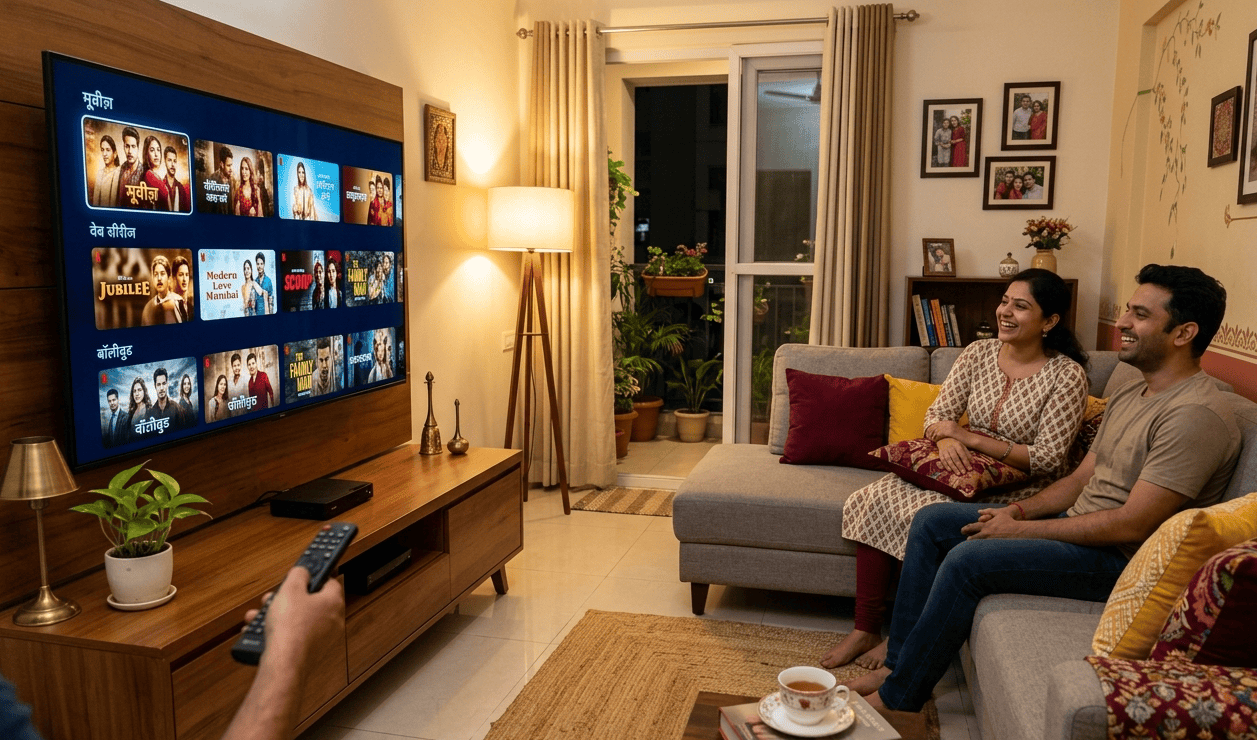
The numbers are hard to ignore. Connected TV advertising in India is on track to nearly double between 2025 and 2026. Here is why it is happening, what is driving it, and what marketers across India and Southeast Asia need to understand about this shift.
By Agency Reporter Editorial Desk | Connected TV & Streaming | 6 min read
Two years ago, if you brought up Connected TV advertising in a media planning meeting in India, you would get polite interest and a quick move to the next agenda item. The audience was too small. The measurement was too murky. The inventory was too fragmented. It was one of those things everyone agreed was going to be important someday.
Someday arrived.
CTV advertising in India is now projected to reach ₹8,000 crore by 2026 — nearly double where it was just a year earlier. The CTV user base in India is heading toward 50 million. The streaming platforms that carry this audience have rebuilt their business models around advertising. And brands that ignored CTV for years are now asking the same question: how do we get in, and how do we do it properly?
Three things happened at the same time
This kind of growth does not come from one thing. It comes from several forces converging. In CTV’s case in India, three things happened roughly in parallel and they reinforced each other.
- 01 Smart TVs became affordable. Entry-level Android TVs dropped below ₹15,000. That pulled CTV out of premium urban households and into a much wider base. The person watching JioCinema on a smart TV in Lucknow or Coimbatore is now as reachable as someone in South Mumbai.
- 02 Streaming platforms moved to ad-supported models. Disney+ Hotstar, JioCinema, Amazon Prime Video, and SonyLIV all now have tiers where viewers watch ads. The IPL on JioCinema effectively introduced an entire country to ad-supported streaming. Viewers accepted it. Brands noticed.
- 03 Programmatic pipes got built. The infrastructure to buy CTV inventory automatically — the same way you buy a display ad on a website — now exists in India. DSPs have CTV inventory. SSPs are connected to streaming publishers. The transaction layer caught up with the audience.
What makes CTV different from everything else
There are channels that reach people at scale. There are channels that reach people with precision. CTV is one of the very few that does both at the same time.
Linear television reaches huge numbers but offers minimal targeting. A brand advertising on a GEC prime time slot is paying for a lot of people who will never buy their product. Digital advertising offers targeting but the environments — a banner inside a news app, a pre-roll before a YouTube video — are a long way from the lean-back, full-attention viewing experience of a television screen.
CTV sits in a genuinely different space. The screen is the same size as a TV. The viewing posture is the same. But the data layer underneath is digital. A brand can target by income bracket, by geography, by what else someone has been browsing, by whether they have visited the brand’s website. And they can measure whether that ad was seen to completion, on what device, in which city.
Linear TV
Massive reach, zero precision. You buy a time slot and hope the right people are watching. No completion data, no targeting, no retargeting.
Connected TV
Large reach with digital precision. Target by demographics, behaviour, and location. Measure completion rates, frequency, and campaign impact.
The Southeast Asia dimension
For brands and platforms operating across India and Southeast Asia, the CTV story has an important regional angle. The markets are at different stages but the trajectory is the same.
In Indonesia, the Philippines, Vietnam, and Thailand, smart TV adoption is accelerating along a curve that looks remarkably similar to India two years ago. The streaming platforms that cracked India — and the adtech infrastructure built to serve them — are looking at Southeast Asia as the next chapter.
This matters for two reasons. First, brands with regional ambitions can build CTV playbooks in India and adapt them for Southeast Asia rather than starting from scratch in each market. Second, platforms that built CTV ad tech for India are increasingly competitive in Southeast Asia because the underlying dynamics — mobile-first audiences, Android TV dominance, price-sensitive consumers warming up to AVOD — are so similar.
What the formats actually look like
CTV advertising is not just a pre-roll video ad on a bigger screen. The format innovation happening right now is significant and worth understanding if you are planning campaigns.
Pause ads appear when a viewer pauses content — a brand message fills the screen at the exact moment when someone has chosen to stop and presumably look around. The viewer is not being interrupted. They stopped themselves. Completion rates on pause ads are striking compared to skippable pre-rolls.
QR code integrations allow a viewer watching an ad on their TV to scan a code with their phone and land on a product page or an offer. The bridge between awareness and purchase intent — which used to take days or weeks — now takes seconds.
Shoppable ad formats are still early in India but the direction is clear. A viewer watching a cooking show sees an ad for a kitchen appliance with a “save to cart” option they can activate with their remote. The TV screen, which was always the most powerful awareness channel in the home, is slowly becoming a transaction surface.
The measurement problem nobody wants to talk about
Here is the honest part. CTV measurement in India is still a work in progress. Cross-device attribution — connecting a CTV ad view to a purchase that happens later on a phone or a laptop — requires data pipelines that most brands and agencies have not fully built yet.
Frequency capping across platforms is another open problem. A viewer who uses JioCinema on their smart TV and also watches on their phone is technically two different devices. Without identity resolution, the same person can see the same ad eight times in a day and no one catches it.
These are real problems. They are being worked on. But any brand going into CTV today should go in with clear eyes about what is measurable and what is not yet. The brands that are winning on CTV right now are the ones that set the right KPIs upfront rather than trying to force CTV to behave like performance digital.
Where to start if you have not yet
The entry point for most mid-sized brands is programmatic CTV through a DSP that has Indian streaming inventory. You do not need to go direct to JioCinema or Hotstar on day one. Start with a test budget, set completion rate and reach as your primary metrics, and treat it as an upper-funnel brand investment rather than a conversion channel.
The brands that will look smart in two years are not the ones who waited for perfect measurement before investing. They are the ones who started learning now, built the creative capabilities for a 30-second TV-quality format, and figured out the audience and frequency sweet spots before CTV inventory got expensive.
Because it will get expensive. The audience is growing, the measurement is improving, and more brands are waking up to what CTV can do. The window for early-mover advantage in Indian CTV advertising is still open. But it will not stay open much longer.
