













The Micro-Influencer Takeover: Why Indian Brands Are Ditching Celebrities

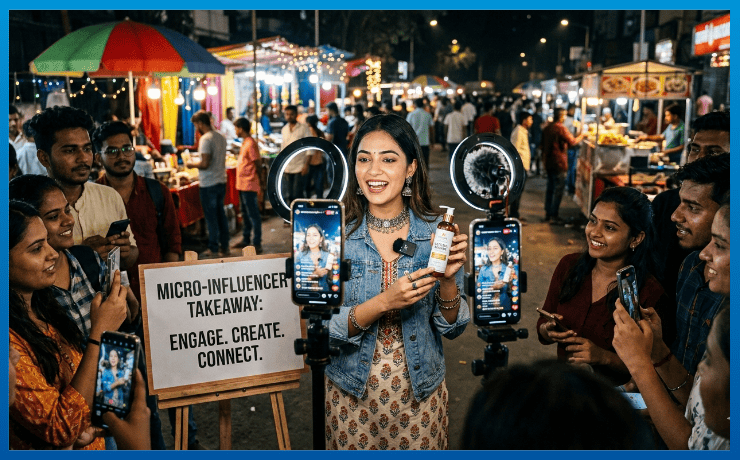
There was a phase when every second ad in India had a celebrity at its center. You could almost predict it. A big launch meant a bigger face. It made sense in a world where attention was limited and television did most of the talking. But that equation has been quietly changing. Not overnight, not dramatically, but steadily enough that you can feel it if you spend time on digital platforms. Today, the people influencing purchase decisions are just as likely to be creators with smaller, highly engaged followings. And brands are not resisting this shift anymore. They are leaning into it.
What’s interesting is that this isn’t being driven by novelty. It’s not like brands suddenly discovered micro-influencers and thought, let’s try something new. This is coming from fatigue, both on the brand side and the consumer side. Celebrity campaigns still deliver visibility, no doubt. But visibility alone isn’t doing the job it used to. People scroll faster, skip quicker, and question more. A polished endorsement doesn’t automatically translate into trust anymore. In contrast, a creator who has built a niche audience over time tends to carry a different kind of weight. Their recommendations feel closer to advice than advertising. That difference is subtle, but it changes outcomes.
Also, if you look at it from a practical lens, the math works better. Instead of spending heavily on one face, brands are spreading budgets across multiple voices. It gives them flexibility. It also reduces risk. If one piece of content doesn’t land, the campaign doesn’t collapse. But beyond cost efficiency, there is something else at play here. Micro-influencers understand their audience in ways that large campaigns often miss. They know what tone works, what doesn’t, what feels forced. And because they are usually creating content in their own style, the integration feels more natural.
India adds another layer to this conversation. It’s not one market, it’s many markets running in parallel. Language, culture, habits, everything shifts every few hundred kilometers. A single celebrity-led message trying to cut across all of this can only go so far. Creators, on the other hand, operate within these micro-contexts. A food creator in Indore speaks differently from one in Chennai. A skincare influencer in Delhi will approach content differently from someone in Kochi. And that’s exactly why brands are finding value here. The messaging doesn’t feel imported. It feels like it belongs.
There’s also been a noticeable change in how audiences react to sponsored content. A few years ago, disclaimers didn’t matter much. Now they do. People are paying attention. They can tell when something is off. In some ways, this has forced creators to be more careful about what they promote, which ironically makes them more credible. It’s a bit of a balancing act. Push too many products and you lose trust. Stay selective and your voice carries more weight. Brands that understand this dynamic tend to get better results because they’re not trying to over-control the narrative.
None of this means celebrities are out of the picture. That would be an oversimplification. They still play a role, especially when scale is the priority. But their role is no longer standalone. What you’re seeing now is more layered thinking. A celebrity might kick off the conversation, but creators keep it going. They add depth, variation, and continuity. In many campaigns, they’re the ones actually driving engagement while the celebrity builds initial recall.
From an agency point of view, this shift is not the easiest to manage. Working with one celebrity is straightforward. Working with twenty creators across regions, each with their own style and timelines, is a different kind of challenge. It requires more coordination, more listening, and honestly, more patience. But it also makes the work more interesting. Campaigns don’t feel as rigid anymore. They evolve as they go live. Sometimes the best-performing content isn’t what was planned at the start.
There’s a line that sums this up quite well, and you hear it often in marketing circles now: people don’t really trust ads, they trust people. It sounds simple, but it’s playing out very clearly in how campaigns are being designed today. The idea of influence has moved away from aspiration. It’s less about looking up to someone and more about relating to them.
If there’s one thing brands will need to be careful about going forward, it’s not to overdo this. The moment micro-influencers start sounding like traditional ads, the advantage disappears. Audiences are quick to pick up on patterns. Authenticity is fragile like that. It takes time to build and very little to lose.
At its core, this isn’t just a shift in media strategy. It’s a shift in mindset. Brands are slowly accepting that influence doesn’t always come from the loudest voice in the room. Sometimes it comes from smaller, consistent voices that people choose to listen to every day. And in a space as crowded as digital, that choice is what really matters.
