














Programmatic CTV in Southeast Asia

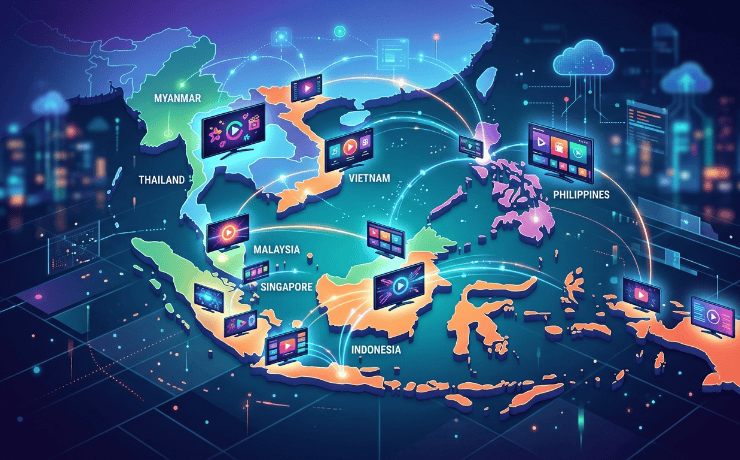
Indonesia, the Philippines, Vietnam, Thailand — connected TV advertising in Southeast Asia is moving along the same curve India traced two years ago. The brands and platforms that understand this parallel can move faster, smarter, and with far less trial and error.
By Agency Reporter Editorial Desk | Connected TV & Streaming | 6 min read
There is a pattern that keeps appearing across emerging digital advertising markets. A market reaches sufficient smartphone and smart TV penetration. A local streaming platform launches and gains traction. An AVOD model emerges because the audience is price-sensitive. Brands start shifting budgets. Then the measurement conversation begins, usually about two years after the media conversation.
India went through this cycle. The CTV advertising market in India crossed ₹4,000 crore and is heading toward ₹8,000 crore. The measurement infrastructure caught up with the inventory infrastructure. Brands that invested early look prescient. Brands that waited are now paying higher CPMs for the same inventory.
Southeast Asia is running the same cycle. The stage setting looks remarkably similar to India circa 2023. Which means there is a real opportunity for brands and platforms with Indian CTV experience to move into Southeast Asian markets with a significant head start.
The market-by-market picture
Indonesia
Largest SEA market by population. Android TV dominant, as in India. Streaming platforms like Vidio and Mola have built AVOD tiers. Programmatic CTV infrastructure is thin but growing. CPMs are low — classic early-market opportunity.
Philippines
High mobile internet usage. English-language content dominance makes cross-market campaigns more adaptable. Smart TV penetration accelerating in Metro Manila and Cebu. Regional language streaming growing.
Vietnam
Fast-growing economy, young population, rising disposable incomes. Netflix, YouTube, and local platforms compete actively. CTV advertising is early but brand investment is beginning to follow viewer attention.
Thailand
Most mature digital ad market in SEA after Singapore. AVOD platforms established. AIS Play and TrueVisions have advertising products. Measurement capabilities are ahead of other SEA markets.
What transfers from India and what does not
The India CTV playbook is not directly portable to Southeast Asia. But several things transfer well and it is worth being precise about which ones.
Android TV as the dominant smart TV platform applies across most of Southeast Asia. This matters because the data infrastructure, the app ecosystem, and the programmatic buying paths built for Android TV in India largely work in Indonesia, Vietnam, and the Philippines. Indian adtech platforms that built SSP and DSP integrations for Android TV are not starting from scratch in these markets.
The AVOD acceptance curve also looks similar. Indian audiences proved that viewers in price-sensitive markets will accept advertising-supported streaming as a reasonable trade-off for free or cheaper content. Southeast Asian audiences, particularly in Indonesia and the Philippines, are showing the same behaviour. Local streaming platforms that launched purely as subscription services are adding AVOD tiers because the data tells them the audience is there.
What does not transfer is the content and language layer. India’s streaming market is complex enough — Hindi, Tamil, Telugu, Bengali, and more. Southeast Asia adds an entirely different set of linguistic and cultural contexts. A CTV campaign that works in India because it uses a culturally resonant insight in Hindi will need to be rebuilt, not adapted, for an Indonesian or Thai audience.
Programmatic buying in SEA CTV — the current state
Programmatic CTV buying in Southeast Asia is behind India by roughly 18 to 24 months. Most CTV inventory in SEA markets is still bought direct — brand to platform, negotiated deal, fixed placement. The automation layer that India now largely takes for granted — programmatic guaranteed, private marketplace deals, open auction CTV — is thinner in SEA.
This is changing. Regional DSPs are adding SEA CTV inventory. Global platforms like The Trade Desk and DV360 have been building publisher relationships across the region. The infrastructure is coming. The question for brands is whether to wait for it to mature or to work with what exists now through direct partnerships and early programmatic integrations.
The brands that built direct relationships with Indian streaming publishers in 2022 and 2023 — before programmatic inventory was abundant — got access, preferential rates, and co-creation opportunities that brands entering now do not. The same dynamic is playing out in SEA today.
The measurement conversation
Measurement in SEA CTV is, to be honest, where India was when the first CTV Asia Symposium conversations were happening. The fundamental questions — how do I know my ad was seen, by whom, on what device, and whether it drove any downstream behaviour — do not have clean answers in most SEA markets yet.
This is uncomfortable but it is also familiar. The brands that invested in Indian CTV when measurement was immature did so because the audience was there and the inventory was still cheap. The measurement got better. The prices went up. The early brands won.
The same logic applies in SEA. You invest in measurement maturity, not just campaign delivery. You set appropriate KPIs — reach, completion rate, brand recall in surveyed audiences — rather than demanding last-click attribution from a medium that does not work that way. And you treat the early period as a learning investment, not a performance channel.
For brands operating across India and SEA
If you are a brand with genuine presence in both India and Southeast Asia, the structural advantage is in your hands right now. Your Indian CTV team has navigated the measurement uncertainty, figured out the creative formats, and built the buying relationships. That institutional knowledge does not need to be rebuilt in SEA.
What it needs is adaptation — a local content strategy, local platform relationships, and local measurement partnerships. The strategic layer transfers. The execution layer needs to be local. Brands that understand the difference between those two will enter SEA CTV markets faster and with lower cost of learning than brands starting from zero.
