


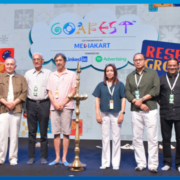


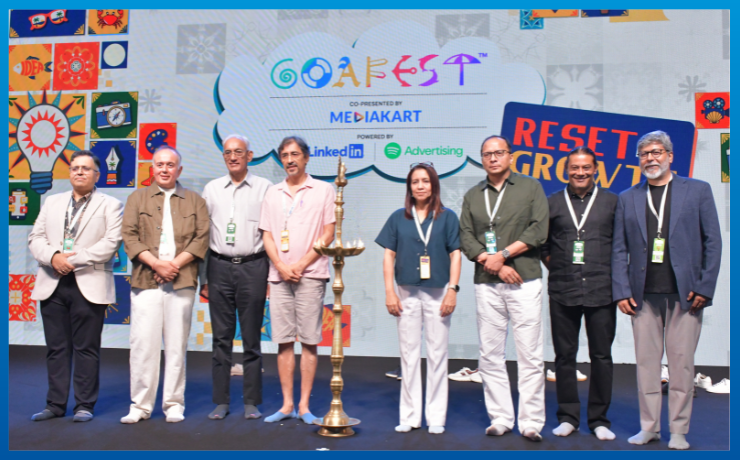
Goafest 2026 opened on May 20 at Taj Cidade de Goa Horizon under the theme Reset for Growth, jointly organised by AAAI and TAC. The 19th edition brought together brands, agencies, media owners and AdTech companies across three days of sessions, masterclasses and the ABBY Awards. Day 1 covered the Media and Publisher categories.
The day had energy. It had familiar faces. It had Sukhbir Singh opening proceedings with a bhangra performance, a formal lamp lighting ceremony, and a room full of people who had made the trip from across the country. Before the first session began, the industry paused for a tribute to Piyush Pandey and Arun Nanda, two people whose fingerprints are on decades of Indian advertising. The response in the room said more than the words did.
What followed was a full day of sessions that moved between industry-level thinking and ground-level honesty, and then an awards night that told a somewhat different story than the stage had.
What Happened on Stage
The opening session brought together Prasoon Joshi of Omnicom India, Dr Rajiv Kumar of Pahle India Foundation, and Nikhil Sharma of Perfetti Van Melle, moderated by Padmaja Joshi of NDTV. The conversation moved between civilisational identity and market reality. Joshi argued Brand India cannot be reduced to a marketing exercise. Sharma grounded it fast: volumes are growing but value is not, and until Indian brands start commanding a premium, the growth story has a ceiling.
Dave Yang from LinkedIn brought a different frame entirely. His point was that India is no longer just a recipient of global strategy but is increasingly the market that shapes it. The professional consumer here is more ambitious and more visible in global business conversations than most platforms have yet fully accounted for.
The day ended with Harmanpreet Kaur in conversation with Mandira Bedi, on pressure, reset, and what it takes to lead when things are not going your way. Kaur’s framing of reset as returning to the present moment rather than a grand reinvention was practical and well-received. Spotify Advertising hosted the Sound-On Sundowner as the formal programme closed.
What the Organizers Said Before the Awards
At a press conference ahead of the ceremony, the Goafest organisers addressed the question of what the ABBY Awards have become and where they are going. A few things stood out.
This year, for the first time, a Client of the Year award was introduced. A client will walk onto the stage and be recognised for their contribution to the industry. Also new: an Independent Agency of the Year category, specifically designed so the recognition does not default to the largest networks. Both clients and agencies will receive a statue on stage, a deliberate signal that the partnership goes both ways.
The categories themselves were co-created this year through a closed-door session with a small group of industry stalwarts, internationally recognised names who helped decide what the awards should reward. The intent is clearly to keep the show honest and ahead of the curve. The question that sits quietly beside that process is who decides which names get into that room, and whether a room built from established reputations can consistently produce categories that challenge them.
On the scale of participation, the numbers were clear: around 4,000 entries from approximately 300 companies, with roughly 437 shortlisted entries coming from 130 plus unique brands. That breadth matters. When 300 organisations choose to enter, the awards are not a closed circuit for the largest spenders.
“We don’t recognise AI. We don’t want to recognise AI. It’s passe. We are recognising innovative use of AI.”
That line, from the press conference, is worth keeping. The organisers are not rewarding AI for existing. They want to see it applied to something real. Whether the entries delivered on that bar is visible in the results.
The Awards: What the Data Says
The Media ABBYs handed out 97 metals on Day 1: 1 Grand Prix, 33 Golds, 29 Silvers and 34 Bronzes.
Main Winners
Media Agency of the Year – EssenceMediacom (88 points, 14 metals: 5 Gold, 6 Silver, 3 Bronze)
Network Agency of the Year – WPP Media (242 points, 37 metals: 19 Gold, 9 Silver, 9 Bronze)
Client of the Year – The Coca-Cola Company (46 points, 8 metals: 1 Gold, 5 Silver, 2 Bronze)
Publisher of the Year – Jagran Prakashan (46 points, 8 metals: 3 Gold, 2 Silver, 2 Bronze, 1 Merit)
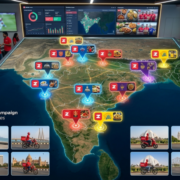
Grand Prix – Tribes Communications for Kansai Nerolac Paints, Micro Marketing category. Campaign: The Barefoot Journey.
That Grand Prix is the most telling result of the night. On a day when the industry gathered to talk about AI, digital-first India and transformation, the highest single award went to a hyper-local, community-rooted campaign for a paints brand. Not a programmatic play. Not a personalisation stack. Geography, people, and a specific insight about who actually uses the product.
The Coca-Cola Company’s Client of the Year win came almost entirely through Thums Up. The brand took metals across social media, moment marketing, emerging technology, commerce and AI in media planning. It is the most systematically activated brand in this year’s Media ABBYs, and the result of a client and agency staying genuinely aligned over a sustained period.
Wavemaker India was the most decorated individual agency by Gold count after EssenceMediacom, with wins across branded content, sponsorship, moment marketing and mobile. The Birla Opus Paints and IPL tie-up ran through multiple categories and picked up multiple metals.
On AI specifically: the two dedicated categories, AI in Media Planning and AI in Media Operations, gave out metals but neither produced a Gold sweep in planning. HiveMinds won Gold in AI in Media Operations for Axis Max Life Insurance. The planning category gave out only Silvers and Bronzes. Given the organisers said they want to see innovative use of AI rather than AI as a label, the jury applied that bar seriously.
CTV registered once: Hearts and Science won a Silver for Jaguar Land Rover’s Defender OCTA Black under Emerging Technology, specifically citing CTV as the medium. One Silver in 97 metals is not a category statement. It is a placeholder, and the industry knows it.
The Honest Read
Goafest reflects the industry as it is, not as it describes itself. The sessions talked about reset and structural transformation. The awards mostly went to brands that showed up consistently, spent well, and built smart integrations in sports and entertainment. That is not a criticism of the winners or the show. It is an accurate read of where Indian media money and conviction actually sit in 2026.
The industry is under genuine pressure from AI, retail media, CTV fragmentation and measurement uncertainty. But the campaigns that won on Day 1 were, on balance, well-funded executions of established media logic. The Barefoot Journey winning the Grand Prix over AI and CTV entries is not a failure of the awards. It may simply be the most honest signal the night produced.
Whether the Creative ABBYs on Day 2 tell a different story is worth watching.
Read also: The Advertising Club introduces new categories and Awards in ABBY Awards 2026
Disclaimer: Information mentioned here has not been verified or endorsed by Agency Reporter and is in accordance with the press release shared by the company or their appointed representatives
