


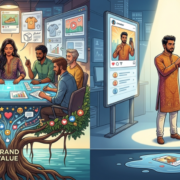


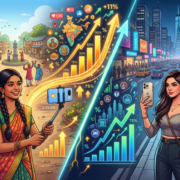







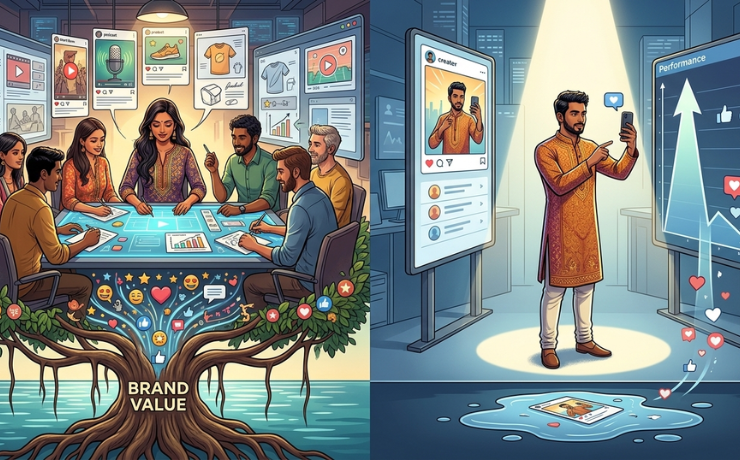
There is a quiet contradiction at the heart of modern influencer marketing. Brands say they want authenticity, trust and community—yet many still buy creator partnerships the way they buy banner ads: one burst, one deliverable, one reporting sheet, and done. The result is predictable. A spike in impressions, perhaps a brief flurry of engagement, and then silence. In India’s rapidly maturing creator economy, where audiences can sense opportunism faster than most marketers can approve a brief, this transactional model is beginning to show its limits. Consumers do not build trust in a single scroll, and creators do not build influence through isolated sponsorships alone. Yet countless campaigns still rely on one-off posts as if awareness and affinity can be manufactured overnight. This is where many brands misread the medium. Creators are not just distribution channels; they are recurring voices in people’s daily attention. Their value compounds through familiarity, consistency and narrative continuity. As one strategist aptly put it, “A one-off post rents attention; a long-term partnership earns memory.” That distinction matters more than ever in a crowded digital environment where every category is louder, faster and more competitive than the last.
The attraction of one-off creator campaigns is understandable. They are easy to plan, easy to price and easy to explain internally. Need reach around a launch? Book ten creators. Need buzz for a sale? Activate twenty more. Need to show activity in a quarterly report? Add another burst. This short-termism often mirrors broader marketing pressures: monthly targets, campaign calendars and procurement-led buying habits. But convenience should not be confused with effectiveness. One-off posts often suffer from three structural weaknesses. First, they lack context. When a creator suddenly promotes a product with no prior association, audiences recognise the commercial intent instantly. Second, they lack repetition. Marketing science has long shown that memory requires reinforcement, yet many brands expect a single piece of branded content to shift behaviour. Third, they lack narrative depth. A skincare product, fintech app, automobile or fashion label rarely becomes meaningful through one static mention. Consumers need to see use cases, experience, credibility and fit over time. In India especially, where purchase decisions are frequently shaped by peer validation and ongoing social proof, fleeting endorsements can feel cosmetic rather than convincing. This does not mean one-off posts never work. They can be useful for tactical moments, product drops, trend hijacks or amplification. But they are often overused for jobs they were never designed to do.
Long-term creator partnerships, by contrast, allow brands to participate in something far more valuable than reach: relationship transfer. When a creator integrates a brand across months rather than moments, the audience begins to perceive the association as chosen rather than rented. That subtle shift changes receptivity. The creator can demonstrate repeated usage, answer audience questions, evolve storytelling formats and connect the product to real life rather than scripted claims. A fitness creator documenting progress with a nutrition brand, a finance educator simplifying features of an investment platform, a travel vlogger repeatedly choosing the same luggage partner—these examples feel believable because time acts as proof. In India, where creators increasingly span language markets, niche communities and regional cultures, continuity also enables localisation. A long-term partner learns how to speak about the brand in ways headquarters decks rarely can. Importantly, longer relationships create better data. Brands can compare performance across formats, seasons and audiences rather than judging success on a single post’s vanity metrics. They can test creator-led commerce, affiliate models, event integrations, offline appearances and community activations. The partnership moves from content line item to growth asset. That is when creator marketing begins to mature from media spend into brand building.

What brands often get wrong, then, is not choosing one-offs entirely—it is treating one-offs as strategy and long-term partnerships as optional luxury. The smarter model is portfolio thinking. Use one-off activations for speed, scale and cultural moments. Use sustained creator relationships for trust, consistency and long-term preference. The challenge is that this requires patience, and patience is not always fashionable in boardrooms chasing instant ROI. But the market is changing. Audiences are more sceptical, creators are more selective, and platforms increasingly reward recurring engagement over isolated promotions. Brands that continue to rotate creators like interchangeable ad units may generate activity, but activity is not the same as equity. The next era of influencer marketing in India will belong to marketers who understand that creators are not merely amplifiers of messages—they are carriers of meaning. And meaning is built slowly. In a world obsessed with virality, perhaps the most underrated growth strategy is simple consistency. Because while one-off posts can win a day, enduring partnerships are what win a category.
