












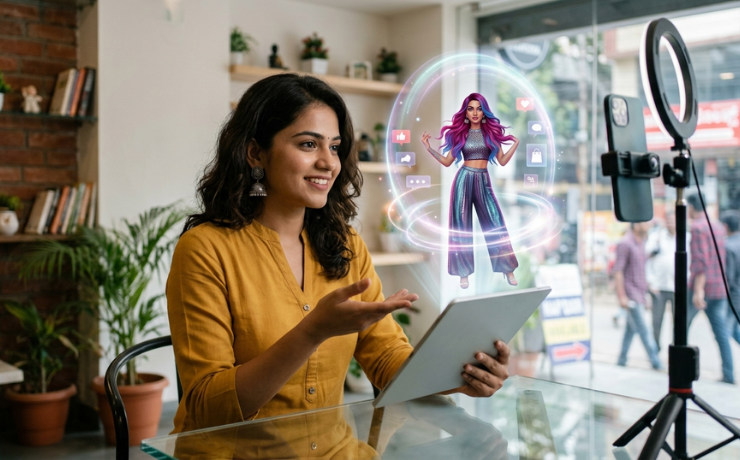
The first time marketers encountered the idea of virtual influencers, most dismissed it as a passing spectacle—an attention-grabbing experiment better suited to tech expos than serious advertising conversations. Yet what once seemed like a novelty has steadily moved into the mainstream. Computer-generated personalities now collaborate with luxury fashion houses, appear in music videos, launch branded merchandise, and build online communities that rival human creators in scale. Globally, brands have embraced digital personalities such as Lil Miquela and Imma not merely as curiosities, but as strategic assets. In India, where influencer marketing has grown into one of the most dominant pillars of modern brand communication, the arrival of virtual influencers has naturally triggered both excitement and scepticism. Some see them as the future of brand storytelling—an innovative fusion of AI, creativity, and commerce. Others dismiss them as yet another overhyped trend in an industry perpetually chasing the next shiny thing. The truth, as always, sits somewhere in the middle. Virtual influencers are neither an automatic revolution nor an empty gimmick. They are, instead, a reflection of how rapidly marketing is evolving in a digital-first world where technology increasingly shapes both creativity and consumer behaviour. As one industry observer aptly put it, “The medium may change, but audiences will always chase stories that feel real.” And that, perhaps, is the very challenge virtual influencers must overcome if they are to find lasting relevance in India.
Part of the growing fascination around virtual influencers stems from the fact that traditional influencer marketing is no longer as effortless as it once appeared. What began as an organic and highly trusted marketing channel has matured into a crowded ecosystem filled with unpredictability. Brands today deal with everything from inflated follower counts and fake engagement metrics to public controversies, creative disagreements, delayed deliverables, and influencers whose personal conduct can derail campaigns overnight. In that context, the appeal of a virtual influencer is obvious. A digital personality offers brands complete control—over appearance, messaging, timing, tone, and behaviour. They do not make controversial statements on live streams, disappear during campaign windows, or unexpectedly endorse competing products. Every piece of content can be crafted with surgical precision. For marketers operating in high-stakes categories where brand safety matters deeply, that kind of predictability is undeniably attractive. Beyond the logistical advantages, virtual influencers also unlock creative freedom in a way human creators cannot. A digital avatar can be designed without limitations, placed in surreal environments, styled in impossible fashion, and transformed to fit any aesthetic narrative a brand chooses. For industries such as fashion, beauty, gaming, and technology—where visual identity and aspirational storytelling drive consumer appeal—this opens exciting possibilities. In a world where social media increasingly rewards spectacle, virtual influencers allow brands to create content that feels cinematic, futuristic, and larger than life. They are built for the visual excess of the digital era, where stopping the scroll often matters as much as delivering the message itself.
And yet, India is not a market where novelty alone guarantees success. If anything, Indian consumers tend to be deeply emotional in how they engage with creators and content online. The influencer economy here has flourished not simply because creators look aspirational, but because they feel relatable. Audiences connect with influencers who speak their language, understand their realities, reflect their humour, and seem like people they could know in real life. This is where virtual influencers face their most significant barrier. No matter how advanced the technology becomes, a computer-generated personality still lacks lived experience—and consumers can sense that absence. While a virtual creator may draw initial curiosity, curiosity alone is not enough to sustain influence. Marketing often mistakes visibility for connection, but the two are far from identical. Consumers may stop scrolling to admire a digital avatar, but whether they trust its recommendation is an entirely different question. In India especially, where audiences often scrutinise even celebrity endorsements for authenticity, an artificial influencer can quickly feel too polished, too scripted, and too detached from reality. The risk for brands is that virtual influencers can appear more manufactured than meaningful if not handled carefully. Today’s digital audiences are sharper than ever; they understand how brand narratives are built, recognise over-engineered campaigns, and increasingly reject communication that feels forced. A virtual influencer, by design, starts from a place of scepticism because consumers know it exists purely as a constructed marketing device. Without strong storytelling or emotional depth behind the character, it risks becoming little more than a visual gimmick—interesting to look at, but easy to forget.
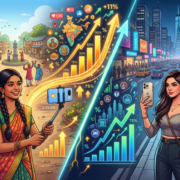
Still, writing off virtual influencers entirely would be premature. Their greatest potential in India may lie not in replacing human creators, but in existing alongside them as part of a broader brand storytelling toolkit. The real opportunity is for marketers to stop viewing virtual influencers as substitutes and start treating them as specialised creative properties. They are unlikely to outperform trusted human creators when it comes to authenticity-driven campaigns, but they could thrive in areas where imagination matters more than relatability. A gaming launch, a futuristic fashion drop, a tech-led brand activation, or an immersive digital experience may all benefit from a virtual ambassador designed specifically for that world. In such contexts, the artificiality becomes part of the appeal rather than a weakness. Some brands may even develop proprietary virtual personalities as long-term intellectual property, much like mascots reimagined for the digital age. As AI technology evolves further, these characters may eventually become more interactive, responsive, and personalised, potentially blurring the lines between influencer, brand representative, and digital assistant. But for all the technological possibilities ahead, one principle will remain unchanged: no audience engages with innovation for innovation’s sake forever. Consumers may be intrigued by what is new, but they stay loyal to what feels meaningful. Virtual influencers may well earn a place in India’s marketing future, but only if brands resist treating them as trend-led shortcuts and instead build them with the same care, cultural understanding, and narrative depth required of any great brand asset. Because in the end, whether a face is human or computer-generated matters less than one simple truth—the audience must still believe there is something real behind the performance.
