









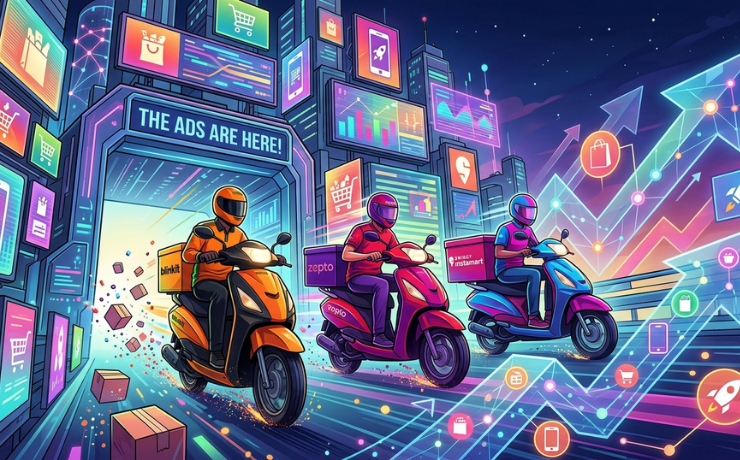
There was a time—not very long ago—when quick commerce apps were simply about urgency. You ran out of milk, snacks, or batteries, and platforms like Blinkit, Zepto, and Swiggy Instamart filled that gap in minutes. That was the pitch. That was the business. But somewhere along the way, something shifted—and if you work in marketing or media, you’ve probably felt it before you’ve fully articulated it. These apps are no longer just delivery platforms; they’re quietly becoming some of the most effective advertising spaces in the country. Not because they set out to be, but because of how people started using them. When consumers changed their habits, the platforms didn’t just keep up—they leaned in.
The biggest difference is intent, and it’s something anyone in the industry immediately recognises when they see it. On most digital platforms, you’re either interrupting someone or hoping to catch them at the right moment. Here, the moment already exists. When a user opens Blinkit or Zepto, they’re not killing time—they’re solving a need. That changes everything. It means every product placement, every sponsored listing, every banner is sitting right next to a potential purchase decision. There’s no long funnel to manage, no extended nurturing cycle. It’s all compressed into a few minutes of scrolling and selecting. And for brands, that’s powerful in a way traditional formats rarely are. It’s less about storytelling and more about showing up at exactly the right time. As someone in the ecosystem recently put it, “You’re not building desire here—you’re meeting it halfway.”
What’s interesting is how quickly the platforms themselves seem to have recognised this shift. The move into advertising doesn’t feel like a long, strategic pivot—it feels almost reactive, like they realised the value of what they were sitting on and decided to act fast. With repeat users, clear buying patterns, and full visibility of what converts, they’ve built something most advertisers have been chasing for years: a closed loop. You don’t just run a campaign—you see what sells, in near real time. For categories like FMCG, household essentials, and impulse buys, that kind of clarity is hard to ignore. It’s no surprise then that budgets are starting to follow. What began as test spends is slowly becoming more structured, more consistent. Agencies are having different conversations now—not just about reach, but about placement, timing, and share of shelf within an app.
Of course, this isn’t without its complications. The more brands push in, the more crowded these platforms risk becoming. If everything starts to look sponsored, users will notice—and they’ll push back in subtle ways. There’s also the question of who gets visibility. Bigger brands will always have an advantage, and smaller players might find it harder to compete unless the platforms actively balance things out. But despite these challenges, it’s hard to ignore where this is headed. Quick commerce is no longer just about logistics; it’s becoming a key part of the media mix. And for anyone working in advertising today, it’s a reminder of how quickly the ground can shift. The spaces that didn’t exist in your plan a year ago are now demanding attention.

Maybe that’s the real takeaway here. Not that Blinkit, Zepto, and Swiggy Instamart became ad platforms overnight—but that the industry didn’t see it coming soon enough. Because in hindsight, it makes perfect sense. When buying becomes this easy, visibility becomes that much more valuable. And in a world like that, the most effective advertising isn’t the loudest or the most creative—it’s simply the one that shows up when the user is ready.
