











There was a time when media buying felt closer to a craft than a system. Plans were shaped in meeting rooms, negotiated over calls, and built on a working knowledge of which platforms carried weight with which audiences. You didn’t just buy inventory—you bought context. That layer hasn’t disappeared, but it now sits alongside something far more complex. Automation has changed not just how media is bought, but how decisions are made in the first place. The question isn’t whether DSPs are better than direct buying, or the other way around. It’s more practical than that. In which situations does automation actually pull its weight, and where does a more hands-on approach still deliver better outcomes?
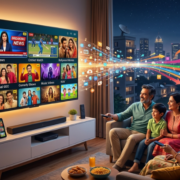
It’s difficult to argue against the role DSPs now play in modern media. The scale alone makes them hard to ignore. Audiences are scattered across devices, platforms, and formats in ways that are almost impossible to map manually. In that kind of environment, automation isn’t a luxury—it’s a necessity. DSPs process signals at a speed no team can match, adjusting bids, reallocating budgets, and refining targeting while campaigns are still live. For performance-led campaigns, especially those tied to clear outcomes like conversions or installs, this tends to work in their favour. There’s less lag, fewer assumptions, and a tighter feedback loop. What makes the difference over time is consistency. Campaigns improve not because of one breakthrough moment, but because the system keeps learning and adjusting. It’s incremental, almost unremarkable when you look at it up close, but the cumulative effect is hard to dismiss.
That said, not every campaign benefits from being treated as a performance problem. There are moments where placement carries as much meaning as the message itself. This is where direct buying continues to hold relevance. A carefully chosen environment—whether it’s a premium homepage, a high-impact masthead, or a content partnership—does something that programmatic often struggles to replicate. It frames the brand in a certain way. It signals intent. It places the message in a context that audiences already trust or pay attention to. For brands working on perception, not just response, that distinction matters. There’s also the question of visibility into where money is going. Programmatic has made progress on transparency, but it hasn’t eliminated concerns around supply chains, intermediaries, or brand safety. Direct deals, by comparison, are simpler. You know the publisher, the placement, and the terms. That clarity can be valuable, especially when stakes are high.
Another aspect that tends to get overlooked is how creative and context intersect with the buying decision. Automation is very good at distributing messages efficiently, but it doesn’t decide what those messages should feel like in a given environment. That still depends on human judgement. A campaign might be optimised to reach the right audience at the right frequency, but if the setting feels off, the impact can be diluted. As someone once put it during a planning discussion, “you can automate delivery, but you can’t automate meaning.” It’s a simple way of putting it, but it captures the gap fairly well. Because ultimately, brands are not just trying to be delivered—they’re trying to connect. And connection depends on more than targeting.
What’s changed over the past few years is not just the tools available, but how they’re being used together. The sharper marketers aren’t choosing between DSPs and direct buying in isolation. They’re combining them based on what each part of a campaign needs to achieve. Automation handles the scale and complexity—finding audiences, managing frequency, and optimising delivery across channels. Direct buying is used more selectively, often when context, storytelling, or visibility becomes important. This isn’t always a neat split. It requires clarity on objectives and, more importantly, a willingness to accept that not every outcome will be measured the same way. Some parts of a campaign will be judged on efficiency. Others will be judged on how they shape perception. Both can be valid, even if they don’t sit comfortably in the same dashboard.
At the same time, the gap between the two approaches is narrowing. Programmatic guaranteed deals and private marketplaces are bringing a degree of control into automated buying that didn’t exist earlier. On the other side, direct deals are increasingly informed by data, whether it’s audience insights or behavioural patterns. The distinction hasn’t disappeared, but it’s less rigid than it used to be. In practice, most media plans today sit somewhere in between.

Looking ahead, automation will continue to improve. There’s little doubt about that. As data signals evolve and AI becomes more embedded in decision-making, DSPs will get better at predicting outcomes and adjusting campaigns in real time. But it’s unlikely that they will replace the need for judgement. Media doesn’t operate in a vacuum—it sits within culture, timing, and context, all of which are harder to reduce to a formula.
So when does automation actually win? Usually when the problem is scale, speed, or efficiency. When the objective is clearly defined and measurable, DSPs tend to do what they’re designed to do. But there are still areas where a more deliberate, hands-on approach holds its own—particularly when the goal is to shape how a brand is perceived rather than simply drive an action.
In the end, this isn’t really about picking a side. It’s about knowing what each approach is good at, and being honest about what the campaign needs. Because the difference between a plan that works and one that doesn’t often comes down to that judgement call—when to let the system run, and when to step in and make the decision yourself.
