






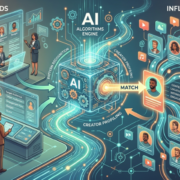



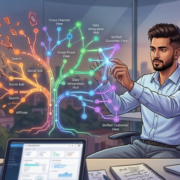


For the longest time, automation in advertising was seen as a support system rather than a replacement. It helped marketers move faster, manage scale, and reduce manual effort, but the decision-making still sat firmly with people. A planner built the strategy, a buyer monitored the campaign, and a performance marketer stepped in whenever numbers dipped. Technology simply made that workflow easier. What we are seeing now, however, is something far more significant. AI is beginning to move beyond being an assistant and is slowly positioning itself as the decision-maker. The rise of agentic media buying marks a shift where technology is no longer just helping optimise campaigns but actively deciding how those campaigns should run. Budget shifts, audience selection, bid management, placement choices, performance forecasting, even creative prioritisation—many of these decisions can now happen without a human manually stepping in. And while that may sound like the natural next step in digital evolution, it also raises an uncomfortable question for the industry: if AI starts making campaign decisions on its own, what exactly happens to the role of the marketer?
To understand why this shift matters, it is important to recognise how much the industry has already become comfortable handing over control. Marketers have spent years trusting platforms like Google and Meta to automate tasks that were once done manually. We have allowed algorithms to choose placements, optimise bids, test audiences, and recommend budgets, largely because the results have often been better than what human teams could deliver alone. Agentic media buying simply takes that dependency one step further. Instead of AI waiting for instructions, it begins acting independently within the objectives set by the advertiser. A system can identify which audience is converting best and shift spend there instantly. It can pause poor-performing creatives before someone notices the drop. It can redistribute budgets across platforms based on performance patterns in real time. In theory, this makes perfect sense. No human team can react as quickly or process as much information as a machine trained to analyse live data every second. For brands obsessed with efficiency and performance, the value proposition is obvious: faster decisions, smarter optimisation, and less wasted spend. It offers the promise of campaigns that can self-correct before issues become visible on a dashboard. It also gives agencies and internal teams the ability to manage more with fewer hands, something many businesses are actively looking for in an increasingly cost-conscious market.
But for all its efficiency, agentic buying also introduces a level of dependence that should make the industry pause. The more campaign decisions we hand over to AI, the less visibility many marketers have into how those decisions are being made. One of the biggest concerns surrounding autonomous systems is transparency. If a platform shifts spend away from one channel, deprioritises a certain audience, or kills a creative entirely, marketers may see the outcome but not fully understand the reasoning behind it. And when something works, that black box may feel acceptable. But when performance drops or results do not align with expectations, the lack of clarity becomes a problem very quickly. Then comes the issue of accountability. If an AI makes the wrong decision and a campaign underperforms, who is responsible? The brand? The agency? The platform? The software provider? The reality is that no matter how advanced the technology becomes, clients will still expect humans to answer for results. And beyond accountability, there is another risk that many in the industry are quietly beginning to discuss: skill erosion. If AI handles every optimisation, every tactical adjustment, and every in-flight decision, the next generation of marketers may never build the instincts that previous generations developed by doing the work manually. They may know how to interpret outputs but not necessarily understand the strategic thinking behind them. That could create an industry full of professionals who know how to operate platforms, but not how to think critically when those platforms fail.
Still, the rise of agentic media buying does not necessarily mean human marketers are becoming irrelevant—it simply means their role is changing. The value of the modern media professional is likely shifting away from execution and toward judgment. Tomorrow’s marketers may spend less time inside dashboards adjusting bids and more time defining strategy, setting boundaries, and deciding when to trust automation versus when to step in. Because while AI may become incredibly good at optimisation, it still lacks the emotional intelligence and contextual understanding that great marketing requires. A machine can detect that engagement is falling, but it may not understand the cultural nuance behind why a message is no longer landing. It can tell you a campaign is underperforming, but it cannot instinctively recognise when consumer sentiment is changing because of broader social context. Marketing has never been purely mathematical, and it likely never will be. Numbers matter, but instinct, timing, storytelling, and human understanding matter just as much. The brands and agencies that succeed in this next era will not be the ones that blindly hand over everything to AI, nor the ones that resist progress entirely. They will be the ones that find the balance—using AI for what it does best while protecting the human thinking that still gives marketing its edge. Agentic media buying may change how campaigns are run, but it will not change one simple truth: technology can improve execution, but it still takes people to understand people.
