



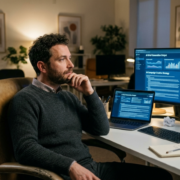












For a long time, work meant one thing for most people: showing up at the office every day, sitting at a desk for fixed hours, and following a routine that rarely changed. That model worked for decades, so few questioned it. But over the past few years, something shifted. Businesses across the world were suddenly pushed to rethink how work could happen outside traditional office spaces. What started as a short-term adjustment slowly turned into a new way of working. Today, the hybrid workplace — where employees split their time between home and office — is no longer a temporary solution. For many companies, it has become a permanent part of how they operate.
This shift has also changed how organisations think about retaining their employees. In the past, companies often believed that offering competitive salaries and career growth was enough to keep talent. Those things still matter, of course, but employees today are looking at the bigger picture. They are thinking about their daily lives, their personal responsibilities, and how work fits into all of it. Many professionals are no longer willing to sacrifice balance for the sake of routine. Instead, they want workplaces that trust them to do their jobs without forcing them into rigid structures.
A simple idea captures this change quite well: “When people are trusted with flexibility, they usually respond with responsibility.” Many organisations are now realising that giving employees some control over how they work does not reduce productivity. In fact, in many cases it improves it. When employees are able to manage their schedules, avoid exhausting commutes, and work in environments where they feel comfortable, they often become more focused and motivated. Work stops feeling like something they must endure and starts feeling more manageable.
That said, hybrid work is not just about letting people stay home a few days a week. It has required companies to rethink the purpose of the office itself. Earlier, offices were designed mainly for individual work. Rows of desks, fixed seating arrangements, and long hours in front of computers were the norm. Today, many companies are slowly moving away from that structure. Instead, offices are being used more for collaboration. Teams meet in person for brainstorming sessions, discussions, planning meetings, and creative work that benefits from face-to-face interaction. Meanwhile, tasks that require deep concentration are often completed remotely.
For employees, the benefits of this arrangement are quite noticeable. One of the most immediate changes is the reduction in daily commuting. In large cities, commuting can easily take two to three hours every day. When employees do not have to make that journey every morning and evening, they gain valuable time. Some use that time for family, some for rest, and others for personal development. Over time, this shift can improve overall well-being and reduce the constant fatigue that many professionals once accepted as normal.
Companies are also paying more attention to employee well-being than they did before. For years, workplace wellness was often treated as an additional initiative rather than a priority. But hybrid work has made organisations realise that well-being directly affects performance. When employees feel stressed, overworked, or disconnected, it eventually reflects in their productivity and engagement. As a result, many companies are introducing better support systems, including mental health resources, flexible leave policies, counselling services, and wellness programs that encourage employees to take care of themselves.
Leadership styles are changing as well. Managing a hybrid workforce is different from supervising a team that sits together in the same office every day. Managers can no longer rely on simply seeing their teams at their desks. Instead, communication has become the key to effective leadership. Clear goals, regular check-ins, and open conversations are now more important than ever. Employees want to feel that their managers understand their challenges and support their growth. When leaders take the time to listen and guide rather than just monitor, employees tend to feel more connected to their work.
Another challenge that companies have had to address is maintaining organisational culture. In traditional offices, culture developed naturally through everyday interactions — conversations in corridors, coffee breaks, or quick chats after meetings. Hybrid workplaces have fewer of those spontaneous moments. Because of this, organisations are becoming more intentional about creating opportunities for employees to connect. Virtual team meetings, informal catch-ups, and cross-department projects are helping employees stay connected even when they are not physically together.
The onboarding experience for new employees has also changed. Joining a company can feel very different when someone is not in the office every day. Without proper guidance, new hires may feel isolated or unsure about how things work. Many organisations are addressing this by designing structured onboarding processes. These might include virtual introductions to different teams, mentorship programs, and scheduled check-ins to help new employees settle in comfortably.
From an industry standpoint, hybrid work has become closely linked to employee retention. People are more likely to stay with organisations that respect their time and provide flexibility. When employees feel trusted, they tend to build stronger loyalty toward their workplaces. On the other hand, companies that insist on rigid structures without considering employee needs may find it harder to retain talent in the long run.
At the same time, businesses must recognise that hybrid work is still evolving. It brings its own set of challenges. Teams must ensure that remote employees receive the same opportunities as those who spend more time in the office. Communication gaps must be addressed quickly, and workloads should be managed carefully to avoid burnout. Flexibility should not mean that employees feel the need to be available all the time. Setting clear boundaries is just as important as offering freedom.
Despite these challenges, the broader direction seems clear. The hybrid workplace is not a passing trend. It reflects a deeper change in how people view work and life. Employees want careers that allow them to grow professionally without ignoring their personal needs. Companies that recognise this shift are already seeing the benefits — stronger engagement, better morale, and improved retention.
Looking ahead, organisations will continue experimenting with hybrid models to find the right balance. Some teams may spend more time together in offices, while others may work remotely more often. Technology will also play a larger role in keeping teams connected and making collaboration easier regardless of location.
In the end, the most successful companies will likely be those that remember one simple truth: workplaces are not just about buildings or schedules. They are about people. When employees feel respected, supported, and trusted, they are far more likely to stay committed to their organisations.
Hybrid work has simply reminded businesses of something that should have always been clear — when companies take care of their people, their people take care of the work.
