










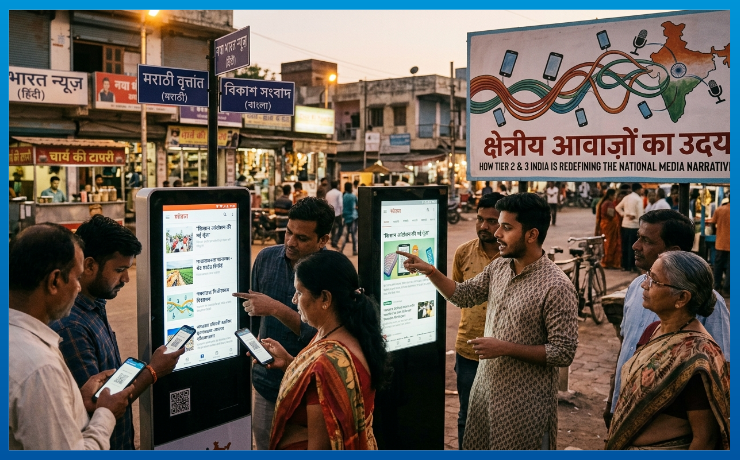
For a long time, the idea of “national influence” in India’s media and marketing industry seemed to orbit around a handful of large cities. If something trended in Mumbai, Delhi, or Bengaluru, it quickly became the story of the day. Campaigns were designed with metro audiences in mind, newsroom priorities often followed urban conversations, and digital strategies largely reflected the preferences of English-speaking internet users. But anyone paying close attention to India’s evolving digital landscape knows that this picture has been changing quietly over the past few years. The centre of gravity is no longer limited to a few metropolitan hubs. Instead, the digital conversation has begun spreading across towns and smaller cities in ways that were difficult to imagine a decade ago. Millions of new internet users are now shaping what gets read, shared, debated, and amplified online. A major driver behind this shift is language. As internet access expanded deeper into the country, people came online not just to consume content but to engage with information in the languages they are most comfortable with. Today, a large share of digital news consumption in India happens in regional languages, and that single trend tells us something important. The internet in India may have started with English as its dominant language, but its future will almost certainly be multilingual. And as more voices join the digital ecosystem in their own languages, the definition of what counts as a “national conversation” is slowly being rewritten.
This change has been powered by a combination of technology and timing. Affordable smartphones and inexpensive mobile data opened the door for millions of people in Tier 2 and Tier 3 cities to come online for the first time. What followed was not just an increase in internet usage but a completely new pattern of digital engagement. People began reading news on their phones during their daily commute, watching regional commentary videos in the evenings, and sharing local issues through social media networks that suddenly felt much more accessible. But the real turning point came when digital platforms started investing seriously in regional language ecosystems. News apps, streaming services, and social platforms realised that growth in India would depend on how well they served audiences beyond the English-speaking metros. Once more content started appearing in languages such as Hindi, Tamil, Telugu, Marathi, Bengali, and Malayalam, engagement rose rapidly. Readers and viewers who once felt that the internet was built for someone else suddenly found content that reflected their own lives. Stories about local governance, regional politics, community concerns, and cultural traditions began finding space on digital platforms. Over time, these stories started travelling beyond their local boundaries. A topic that gains traction within a regional audience today can easily reach a national stage within hours through shares, reposts, and digital commentary. In that sense, influence has become far more distributed than it used to be. Conversations no longer flow only from large metropolitan newsrooms outward. They emerge from many different places at once.
For marketers and agencies, this transformation is beginning to reshape how communication strategies are built. Regional audiences are no longer treated simply as extensions of metro markets. They represent distinct communities with their own cultural references, humour, aspirations, and expectations. A campaign that works beautifully with an urban English-speaking audience might not resonate the same way in cities like Indore, Jaipur, Kochi, or Patna. That difference is not just about language translation. It is about context. Increasingly, brands are discovering that regional engagement works best when it feels authentic rather than adapted. Instead of taking a metro campaign and translating it into multiple languages at the last minute, many marketers are beginning to build ideas from within those cultural environments. Local creators, regional influencers, and vernacular media platforms are becoming important collaborators in that process. They often understand audience sentiment in ways that data dashboards alone cannot capture. One phrase that occasionally comes up in industry discussions sums it up rather neatly: “India does not have one digital audience anymore. It has hundreds of audiences speaking in dozens of languages.” That reality may complicate the job of marketers, but it also opens up new creative possibilities. When brands genuinely understand local contexts, their stories travel much further and feel far more meaningful to audiences.
Another interesting aspect of this shift is how quickly regional conversations can now shape national perception. Social media platforms have removed many of the barriers that once separated local discussions from mainstream visibility. When a topic starts gaining traction within a regional audience, it rarely remains confined there for long. Someone translates it, someone comments on it, someone amplifies it through a video or a thread, and suddenly the conversation spreads far beyond its original geography. For brands, this creates both opportunity and responsibility. On the positive side, campaigns that connect with regional audiences often gain unexpected momentum and travel across the country organically. On the other hand, messages that overlook local sensitivities can face criticism that spreads just as quickly. Reputation today is shaped not only by metropolitan opinion leaders but by communities across the country who now have the tools to express their views instantly. This has made listening far more important than simply broadcasting messages. Understanding regional sentiment is no longer a niche skill within marketing teams. It is becoming a central requirement for anyone trying to communicate effectively in India’s digital ecosystem.
The rise of vernacular digital consumption is also changing the media industry itself. Regional publishers that once focused mainly on print or broadcast formats are now expanding aggressively into digital platforms. Video platforms are investing in regional storytelling formats that speak directly to local communities. News apps are building multilingual interfaces to reach audiences who prefer reading in their native language. All of this signals a broader transformation in how media businesses think about their audiences. Growth no longer depends only on capturing metro attention. It depends on building strong connections with diverse communities across the country.
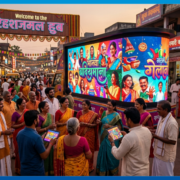
For professionals working in advertising, media planning, and brand communication, the signs of this transformation are already visible in everyday work. Campaign briefs increasingly include vernacular content strategies. Media plans now allocate more attention to platforms with strong regional engagement. Creative teams are asking new questions about tone, cultural nuance, and local relevance. These may seem like small adjustments at first, but together they represent a much larger shift in how influence is understood in the Indian market.
Looking ahead, the importance of regional audiences will almost certainly continue to grow. As connectivity deepens and more platforms invest in local language ecosystems, the digital conversation will become even more representative of India’s diversity. Smaller cities and towns will not simply participate in that conversation. They will shape it. And that may be the most significant lesson for the media and marketing industry today. The next big idea, the next viral story, or the next cultural moment may not begin in a metropolitan newsroom or a large advertising agency. It may begin in a smaller city, in a local language, among audiences who are finally seeing their experiences reflected in the digital world.
