









Not very long ago, conversations about artificial intelligence in marketing mostly revolved around chatbots. Brands were experimenting with automated responses, hoping to reduce response time and improve customer service efficiency. It was useful, certainly, but not exactly revolutionary. Most marketers still relied on familiar playbooks: build a campaign, segment the audience, launch it, and then wait for the numbers to come in. Generative AI is quietly changing that rhythm. What began as a productivity tool has started influencing how marketing decisions are made in the first place.
Walk into any agency strategy meeting today and you will hear a different kind of conversation. The discussion is no longer just about creative concepts or media placement. Teams are asking questions like: what signals are customers giving us right now, what patterns can we learn from them, and how quickly can we respond? Generative AI sits at the center of that shift. It can process enormous volumes of behavioral data, identify emerging patterns, and help marketers adjust messaging almost instantly. That ability to respond in real time is gradually turning marketing from a planned sequence of campaigns into something more fluid and responsive.
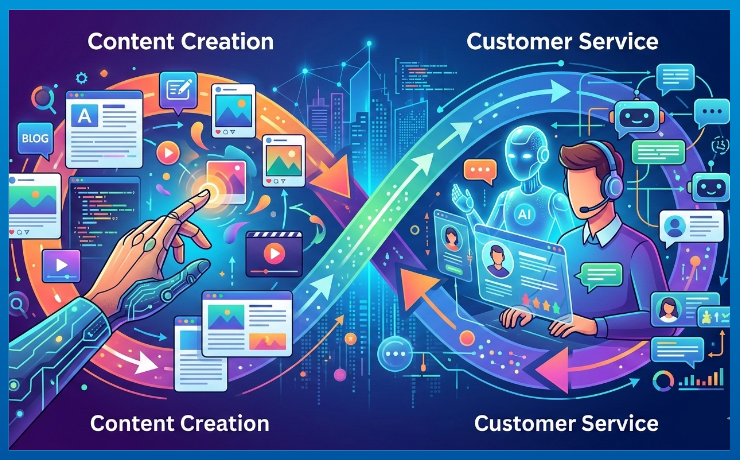
Content creation was the first place where most marketers encountered generative AI in a tangible way. Suddenly, writing a draft blog or generating multiple ad copies became much faster. For overstretched marketing teams, that alone felt like a breakthrough. But over time it became clear that the real value of generative AI was not simply speed. It was flexibility. Instead of producing a handful of campaign assets and hoping they resonate with a broad audience, marketers can now experiment with dozens of variations tailored to different contexts. The message that appears on a customer’s screen can reflect their interests, recent searches, or even the moment in their purchase journey.
Think about how this plays out in everyday brand interactions. A customer browsing for running shoes online may see recommendations that feel surprisingly relevant. Another customer searching for travel ideas might receive destination suggestions aligned with places they previously explored. These experiences are not entirely new, but generative AI allows them to happen more quickly and with far greater nuance. Instead of relying solely on past transactions, brands can consider patterns of behavior, browsing habits, and engagement signals. The result is communication that feels less like advertising and more like guidance.
Still, the influence of generative AI extends beyond marketing messages themselves. It is also reshaping how brands think about customer service. Traditionally, support teams were designed to respond after a problem occurred. A delivery was late, a payment failed, or a product malfunctioned. Customers reached out, and support teams stepped in to resolve the issue. Generative AI opens the door to something more proactive. By analyzing data patterns, systems can sometimes detect a potential issue before the customer even raises it.
Imagine receiving a message from your telecom provider explaining that there is a temporary network disruption in your area, along with an update on when service will return. That small act of communication can prevent frustration and build trust. From a marketing perspective, it also reinforces a brand’s reliability. These moments may not look like marketing campaigns, but they shape how people feel about a brand in ways that traditional advertising often cannot.
For agencies, the growing role of generative AI introduces both excitement and uncertainty. Creative thinking remains the heart of the industry, but clients increasingly expect agencies to guide them through the technological side of marketing as well. Understanding data ecosystems, integrating AI tools into workflows, and translating insights into strategy are becoming part of the everyday conversation. In many agencies, strategists, data analysts, and creative teams now collaborate far more closely than they did a few years ago.
This shift does not mean creativity is becoming less important. If anything, it is becoming more valuable. When machines can generate countless variations of content, the real challenge is deciding which direction truly resonates with people. Ideas still need a human spark. Technology can help marketers understand audiences more clearly, but it cannot replicate the cultural instincts and emotional awareness that shape meaningful storytelling.
Another important dimension of the AI conversation involves trust. Personalization works best when consumers feel comfortable sharing their data with brands. Yet people are becoming increasingly cautious about how their information is used. Marketers therefore face a delicate balance. On one hand, generative AI offers powerful ways to understand and anticipate customer needs. On the other hand, excessive or intrusive targeting can quickly erode confidence. Transparency and responsible data practices will likely determine which brands succeed in the long run.
The metrics that marketers pay attention to are also evolving. For years, success was often measured in terms of impressions, clicks, or reach. Those indicators still matter, but they do not capture the entire picture anymore. Brands are looking more closely at long term engagement signals such as repeat purchases, brand affinity, and customer lifetime value. Generative AI makes it easier to analyze these patterns continuously rather than waiting for quarterly reports. Instead of evaluating campaigns after they finish, marketers can refine them while they are still running.
Perhaps the most interesting outcome of this technological shift is that marketing is starting to feel more human again. That might sound paradoxical considering the role of artificial intelligence, but the logic is simple. When technology handles repetitive tasks and data analysis, marketers have more space to focus on understanding people. Conversations become less about pushing messages and more about responding to needs.
Many industry observers describe this moment as a turning point. Marketing is gradually moving away from the idea of broadcasting messages to large anonymous audiences. In its place is a model built on ongoing interaction. Brands listen, respond, learn, and adapt. Generative AI simply accelerates that cycle.
Of course, technology alone does not guarantee better marketing. Tools can amplify both good and bad practices. If used carelessly, generative AI could lead to generic communication flooding digital channels. If used thoughtfully, however, it has the potential to deepen the relationship between brands and consumers.
There is a line that often comes up in conversations about the future of marketing: the best marketing rarely feels like marketing. Instead, it feels like help arriving at the right moment. Generative AI brings the industry a step closer to that idea. By understanding patterns in how people search, browse, and interact with brands, it allows companies to anticipate needs rather than interrupt attention.
The technology will undoubtedly continue to evolve, and marketers will keep experimenting with new ways to use it. But the broader direction already seems clear. Marketing is becoming more adaptive, more contextual, and in many ways more personal. For agencies and brands willing to embrace both the creative and analytical possibilities of generative AI, the opportunity is not just to work faster but to connect more meaningfully with the people they serve.
